



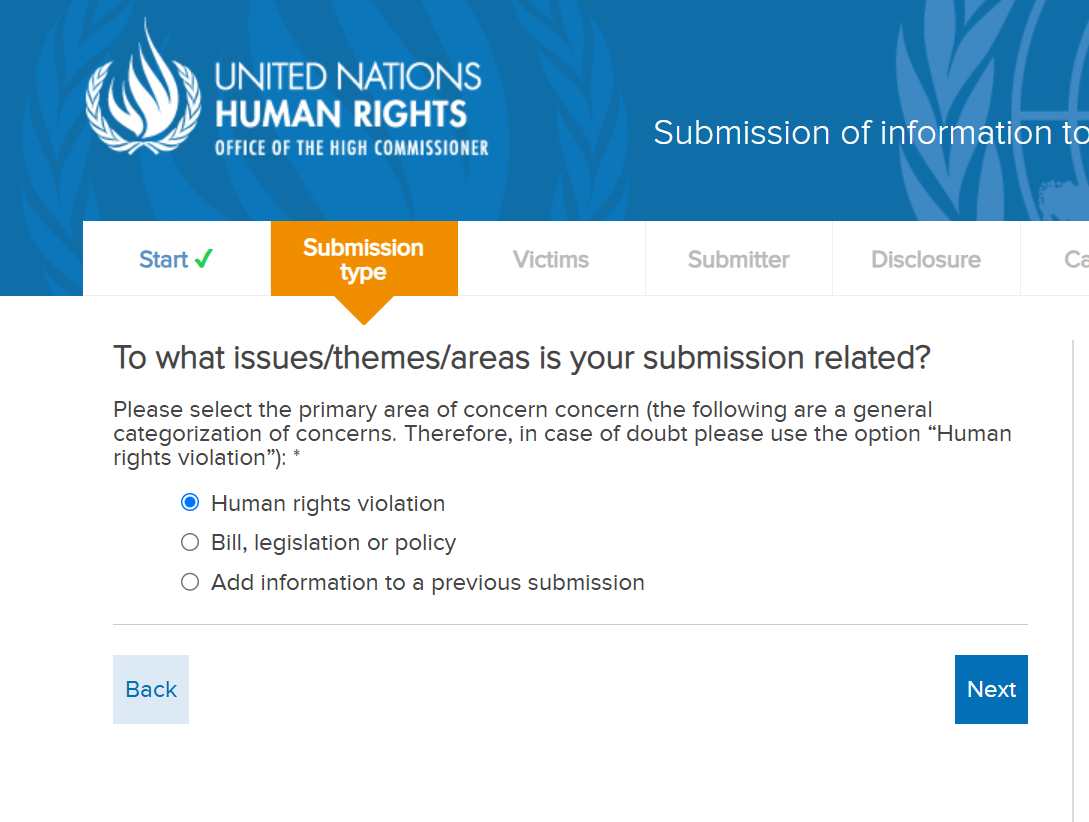
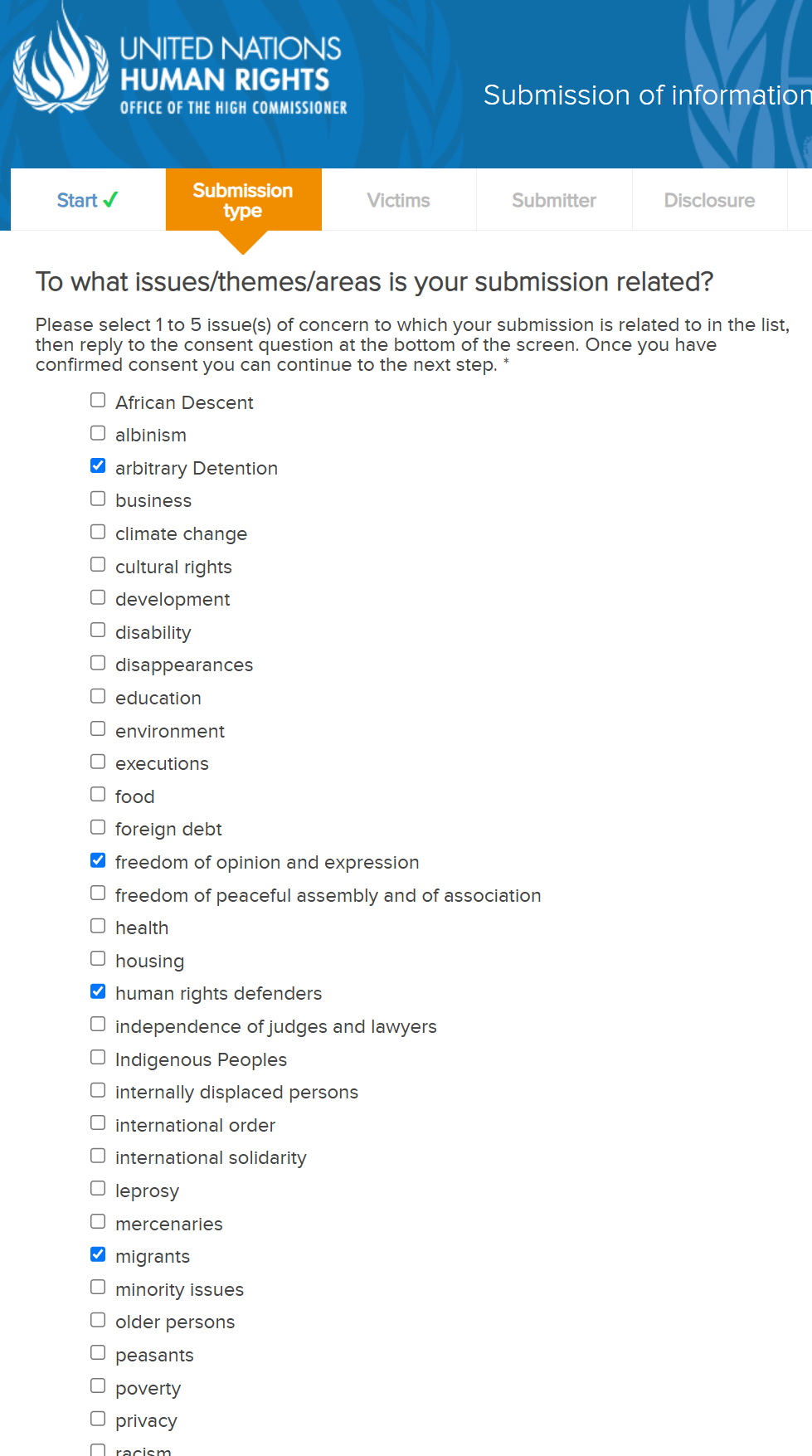
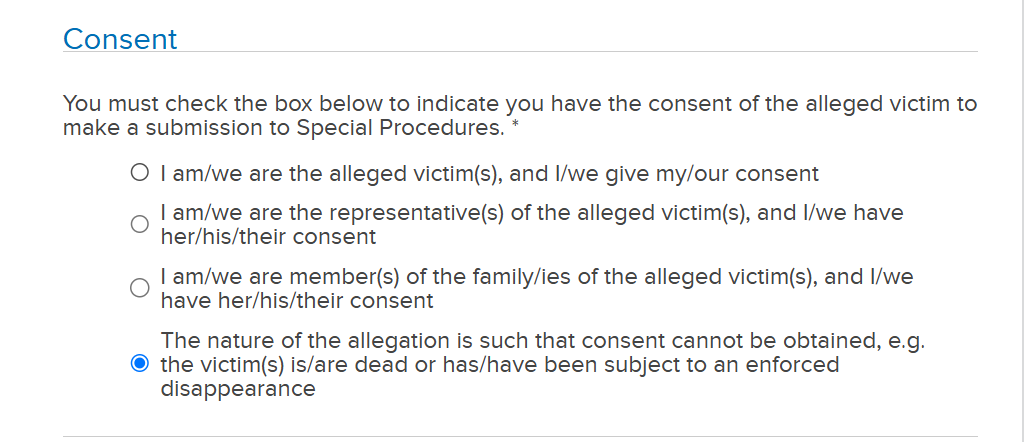
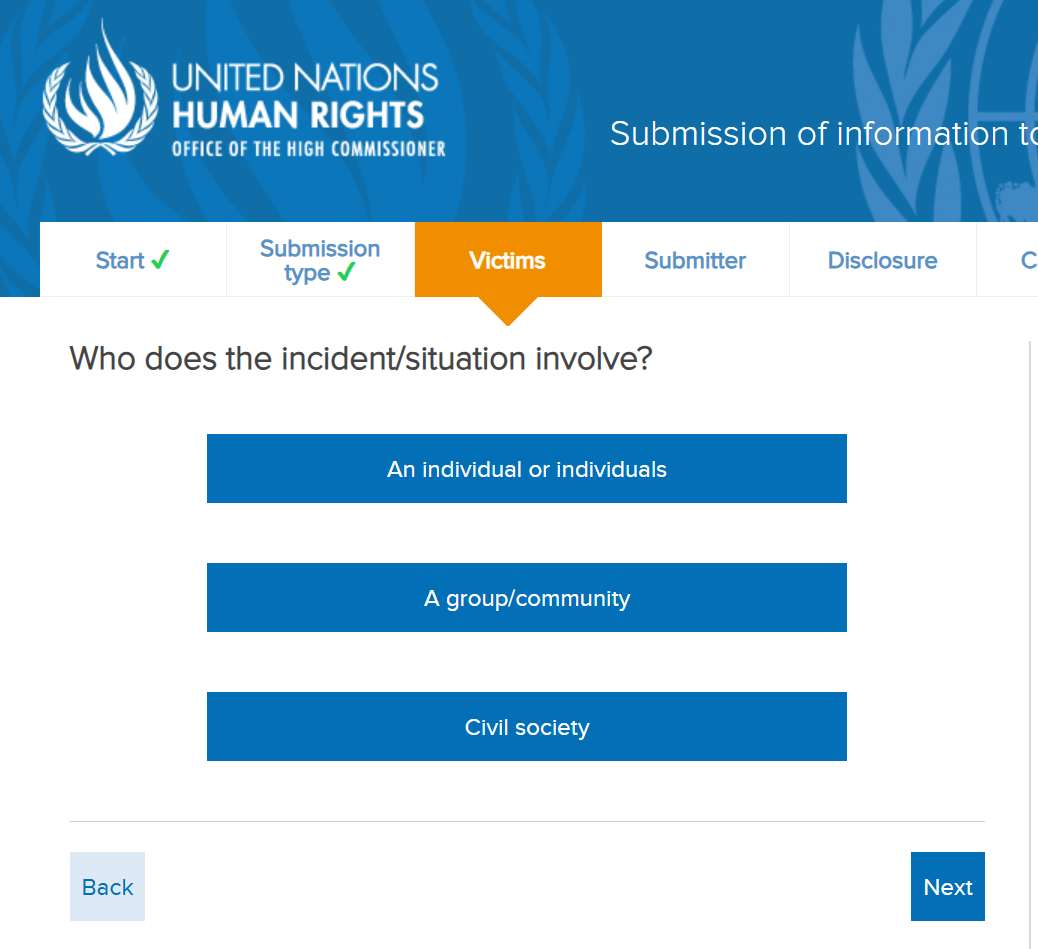
HƯỚNG DẪN NỘP HỒ SƠ NHÂN QUYỀN CHÍNH THỨC LÊN CÁC CƠ CHẾ ĐẶC BIỆT CỦA LIÊN HIỆP QUỐC

Vui lòng thực hiện đúng theo các chỉ dẫn được cung cấp.
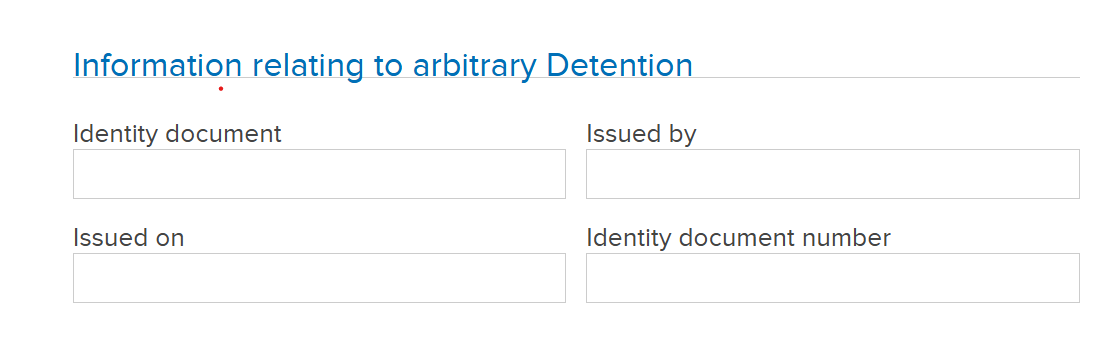
Identity document:
Vietnamese Passport
Issued by:
Government of Vietnam – Ministry of Public Security
Issued on:
Unknown (passport later revoked by Vietnamese authorities)
Identity document number:
Unknown (passport confiscated and revoked)
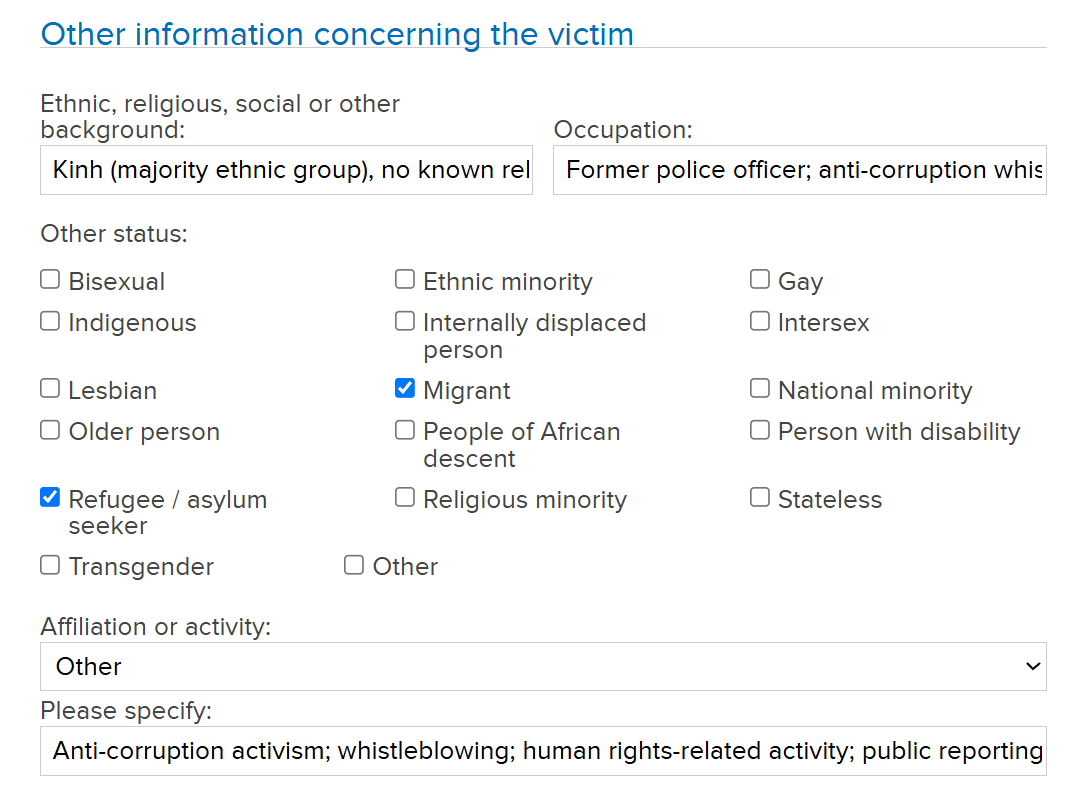
Ethnic, religious, social or other background:
Kinh (majority ethnic group), no known religious affiliation. Former police officer turned whistleblower.
Occupation:
Former police officer; anti-corruption whistleblower; online commentator exposing police abuses.
Please specify:
Anti-corruption activism; whistleblowing; human rights-related activity; public reporting on police misconduct; freedom-of-expression work.
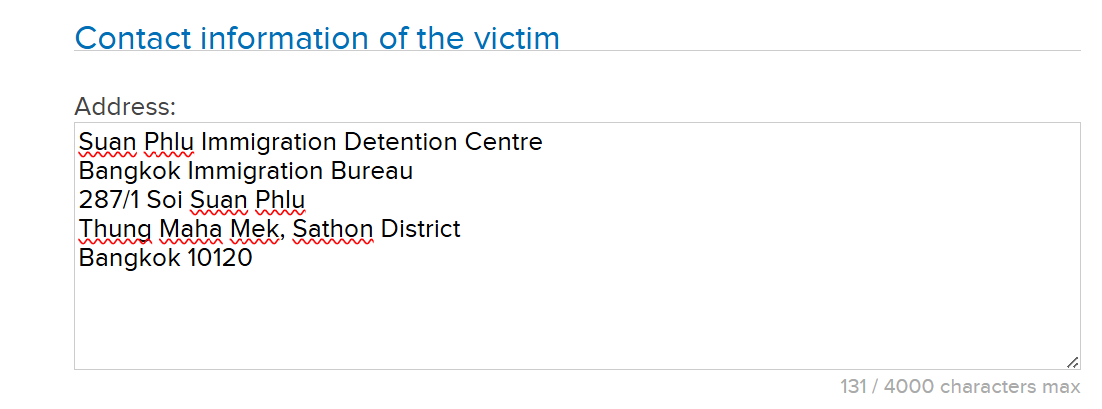
Suan Phlu Immigration Detention Centre
287/1 Soi Suan Phlu
Thung Maha Mek, Sathon District
Bangkok 10120
Thailand
None – the victim is detained and unreachable.
phone
None – the victim is detained and unreachable.
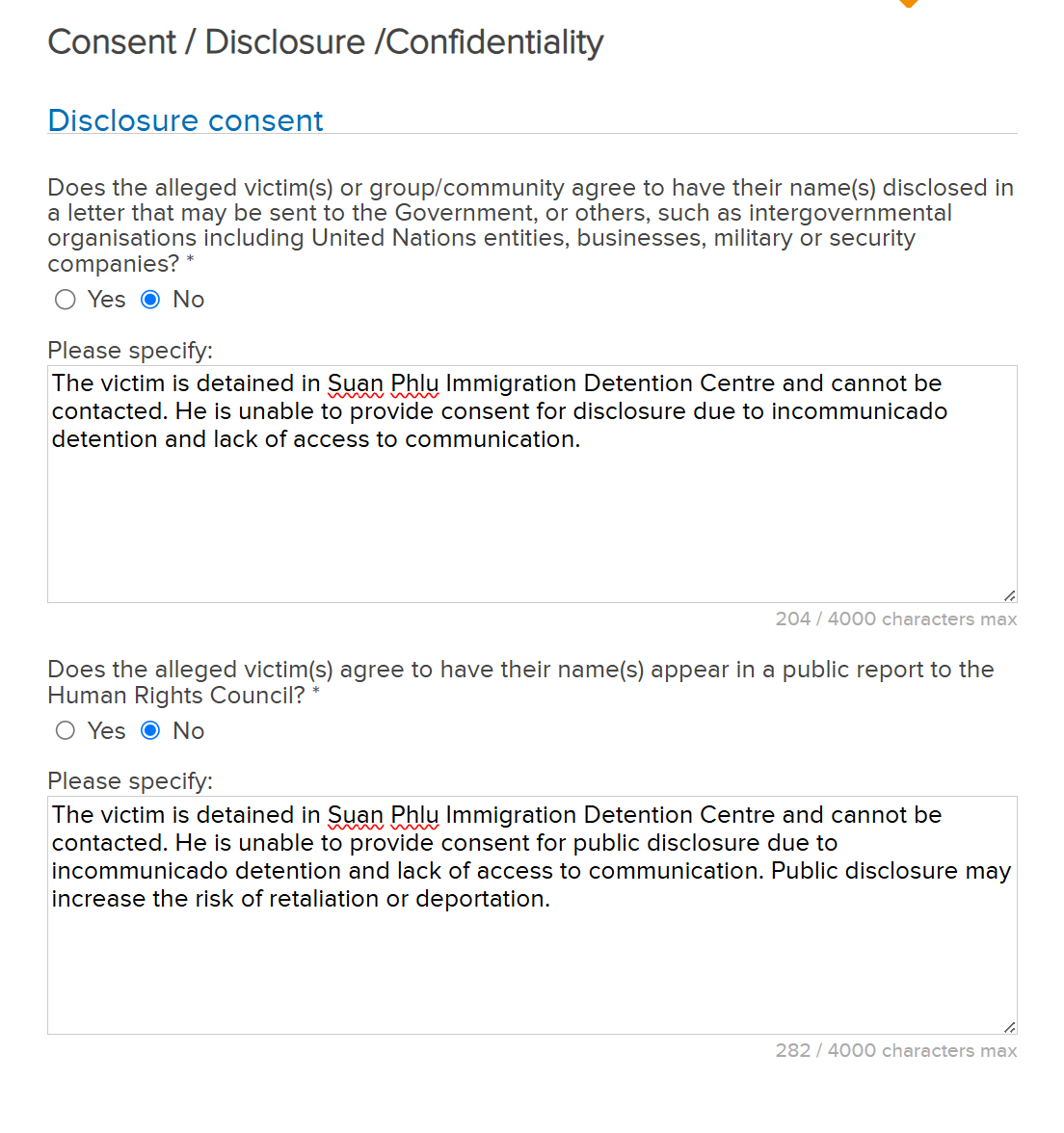
The victim is detained in Suan Phlu Immigration Detention Centre and cannot be contacted. He is unable to provide consent for disclosure due to incommunicado detention and lack of access to communication.
The victim is detained in Suan Phlu Immigration Detention Centre and cannot be contacted. He is unable to provide consent for public disclosure due to incommunicado detention and lack of access to communication. Public disclosure may increase the risk of retaliation or deportation.
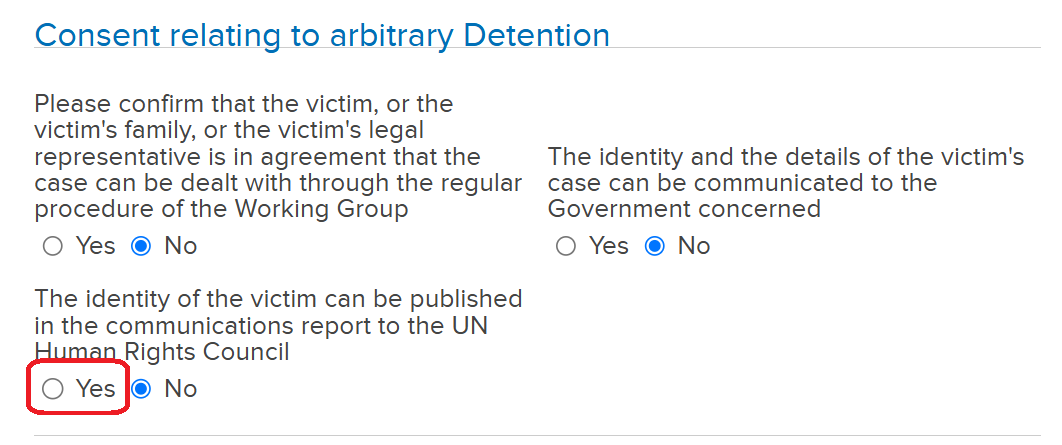
The identity of the victim can be published in the communications report to the UN Human Rights Council
"YES"
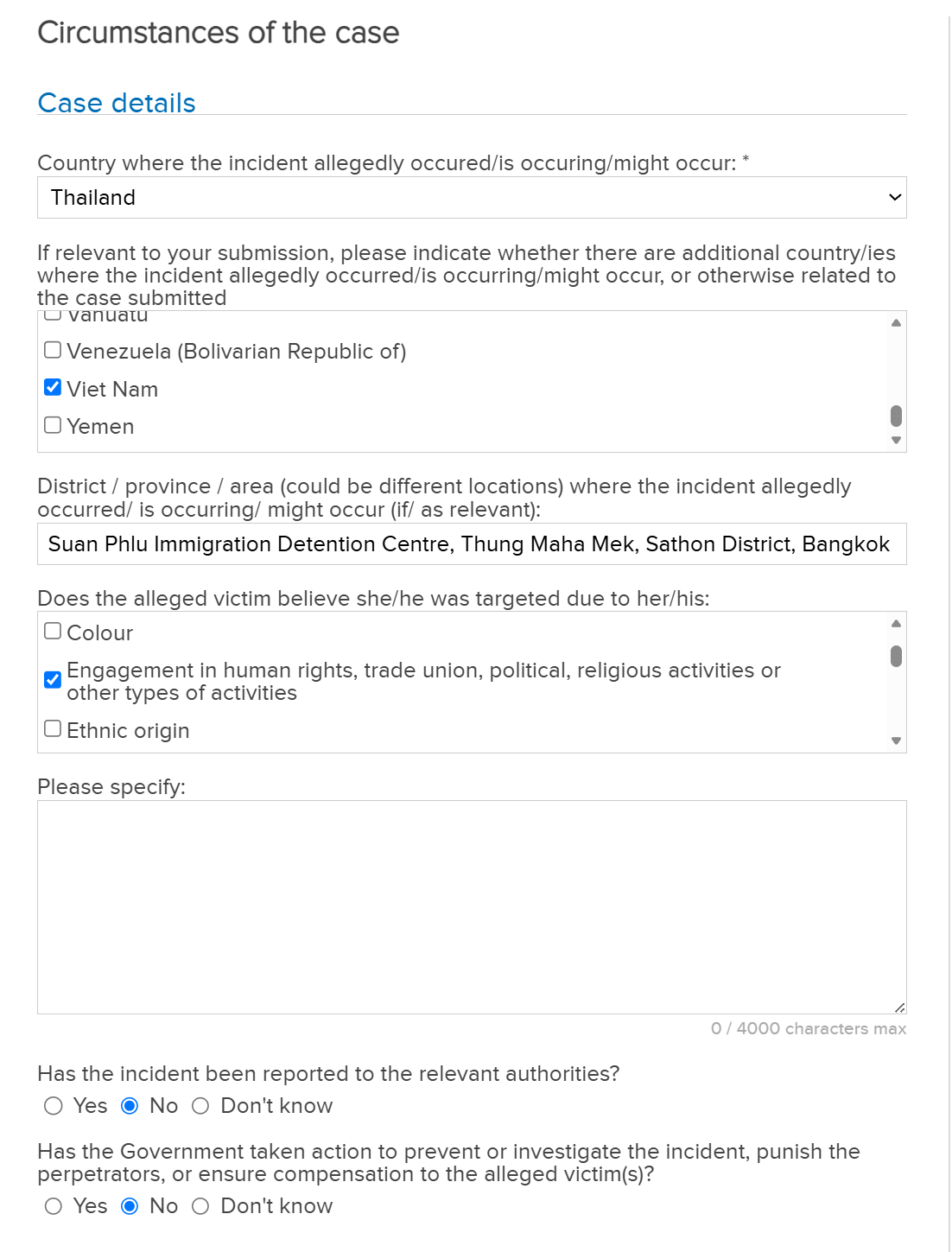
Suan Phlu Immigration Detention Centre
287/1 Soi Suan Phlu
Thung Maha Mek, Sathon District
Bangkok 10120
Thailand
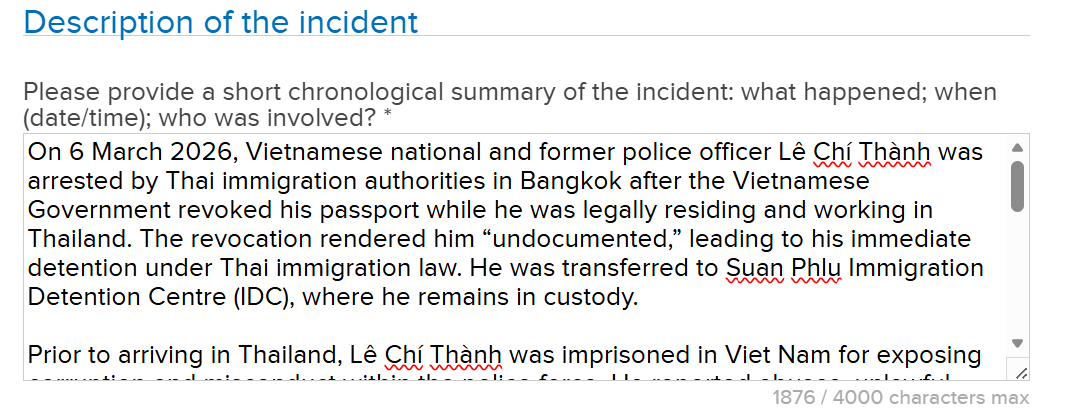
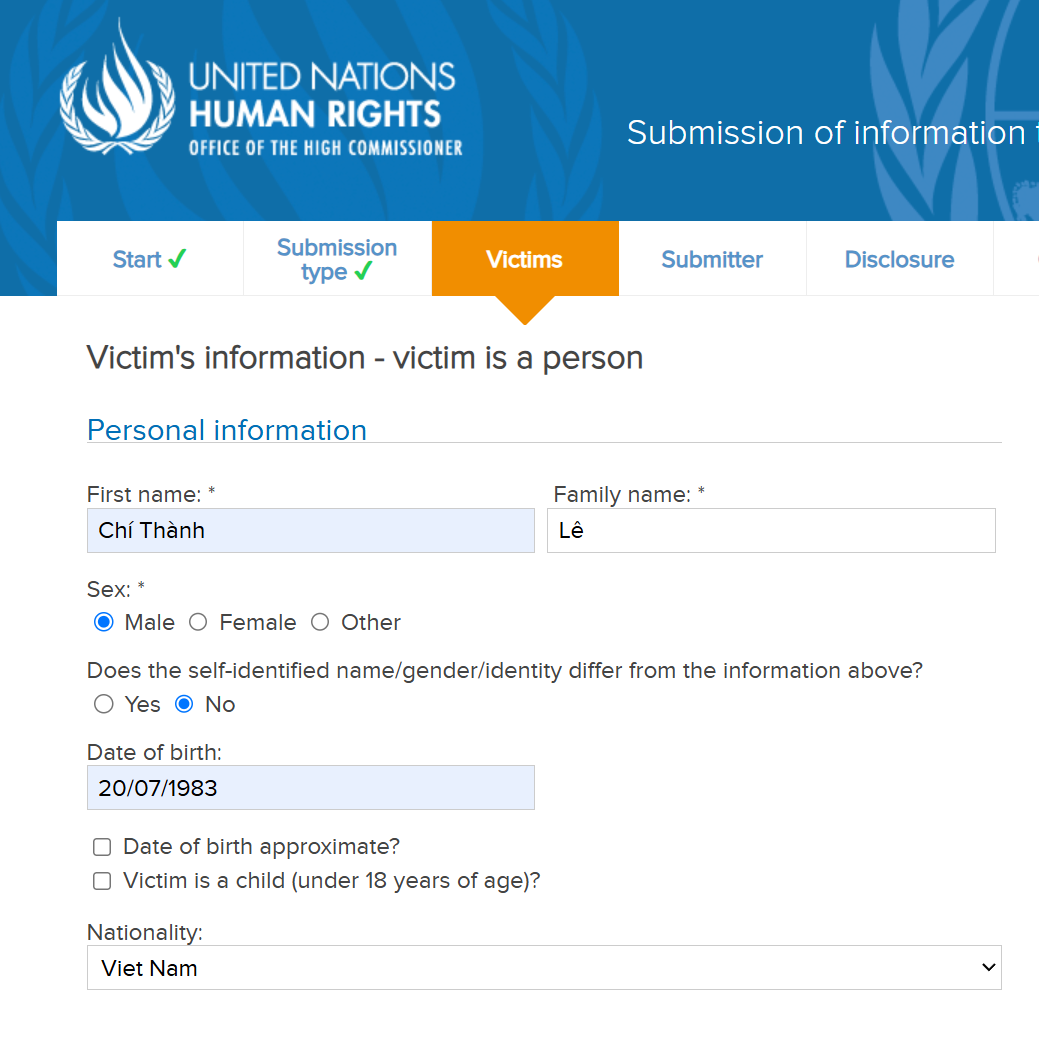
On 6 March 2026, Vietnamese national and former police officer Lê Chí Thành was arrested by Thai immigration authorities in Bangkok after the Vietnamese Government revoked his passport while he was legally residing and working in Thailand. The revocation rendered him “undocumented,” leading to his immediate detention under Thai immigration law. He was transferred to Suan Phlu Immigration Detention Centre (IDC), where he remains in custody.
Prior to arriving in Thailand, Lê Chí Thành was imprisoned in Viet Nam for exposing corruption and misconduct within the police force. He reported abuses, unlawful confiscations, and internal wrongdoing through online platforms. For these activities, he was arrested in 2021, tortured during detention, and sentenced to prison on politically motivated charges. After release, he fled to Thailand seeking safety.
Since his detention in Suan Phlu IDC, he has been held incommunicado. He has no access to a telephone, email, legal counsel, or UNHCR. No family members or NGOs have been permitted to contact him. Thai authorities have not provided information on his legal status, duration of detention, or any protection assessment.
There is a credible and immediate risk that Thai authorities may deport him to Viet Nam. If returned, he faces a high likelihood of torture, ill treatment, and renewed imprisonment due to his past whistleblowing, political expression, and human rights related activities. Viet Nam has a documented pattern of reprisals against former police whistleblowers and political dissidents.
The incident involves: Thai Immigration Bureau officers (arrest and detention), Suan Phlu IDC officials (continued detention and denial of communication), and Vietnamese authorities (passport revocation and prior persecution). The situation is ongoing, and the victim remains at risk of refoulement and further harm.
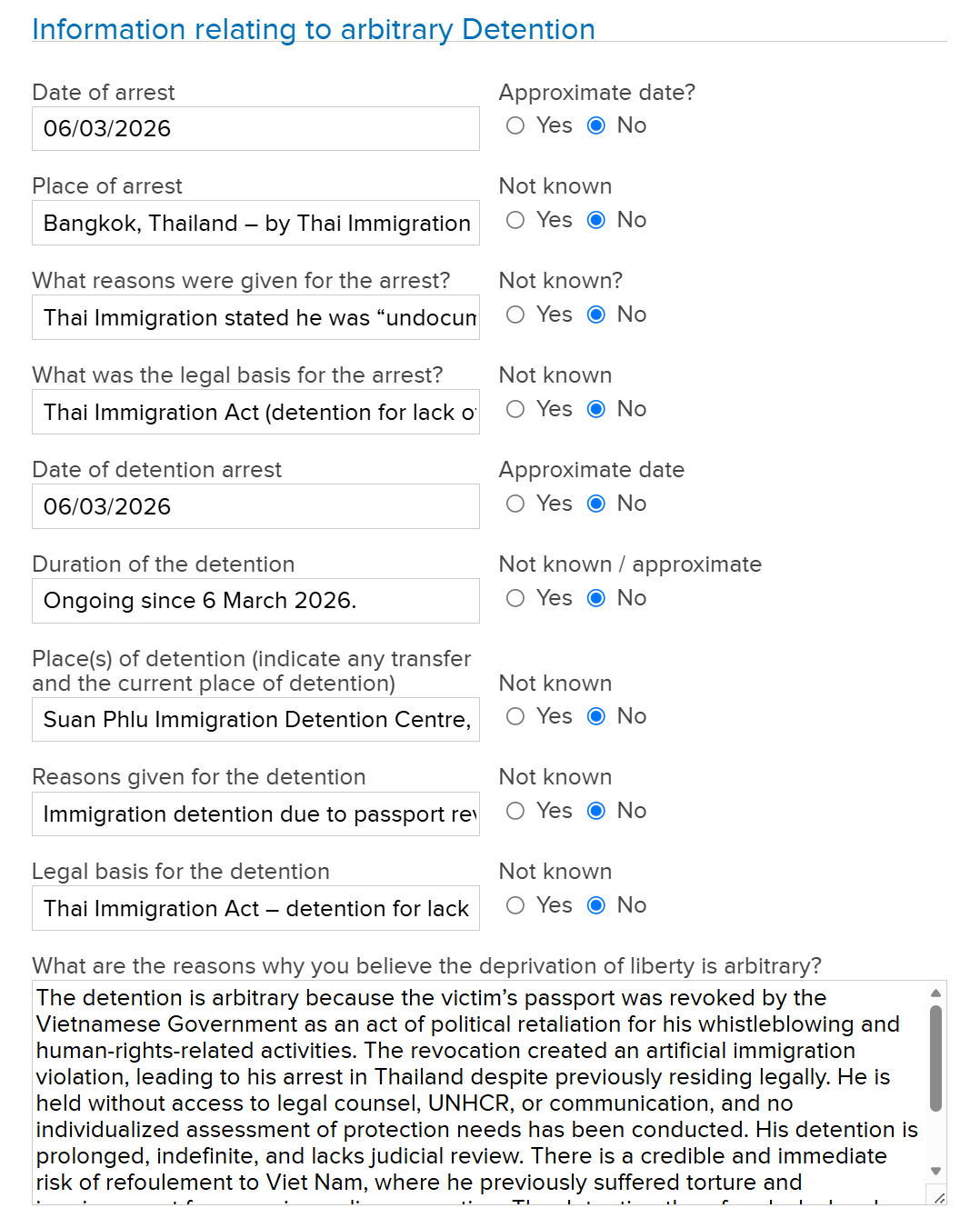
6 March 2026
Bangkok, Thailand – by Thai Immigration Bureau officers
Thai Immigration stated he was “undocumented” after the Vietnamese Government revoked his passport.
Thai Immigration Act (detention for lack of valid documentation following passport revocation).
6 March 2026
Ongoing since 6 March 2026.
Suan Phlu Immigration Detention Centre, Thung Maha Mek, Sathon District, Bangkok (current and only place of detention).
Immigration detention due to passport revocation by Vietnam, rendering him “undocumented.”
Thai Immigration Act – detention for lack of valid travel documents.
The detention is arbitrary because the victim’s passport was revoked by the Vietnamese Government as an act of political retaliation for his whistleblowing and human rights related activities. The revocation created an artificial immigration violation, leading to his arrest in Thailand despite previously residing legally. He is held without access to legal counsel, UNHCR, or communication, and no individualized assessment of protection needs has been conducted. His detention is prolonged, indefinite, and lacks judicial review. There is a credible and immediate risk of refoulement to Viet Nam, where he previously suffered torture and imprisonment for exposing police corruption. The detention therefore lacks legal basis, is disproportionate, and serves the political interests of another State, constituting arbitrary deprivation of liberty under international human rights standards.
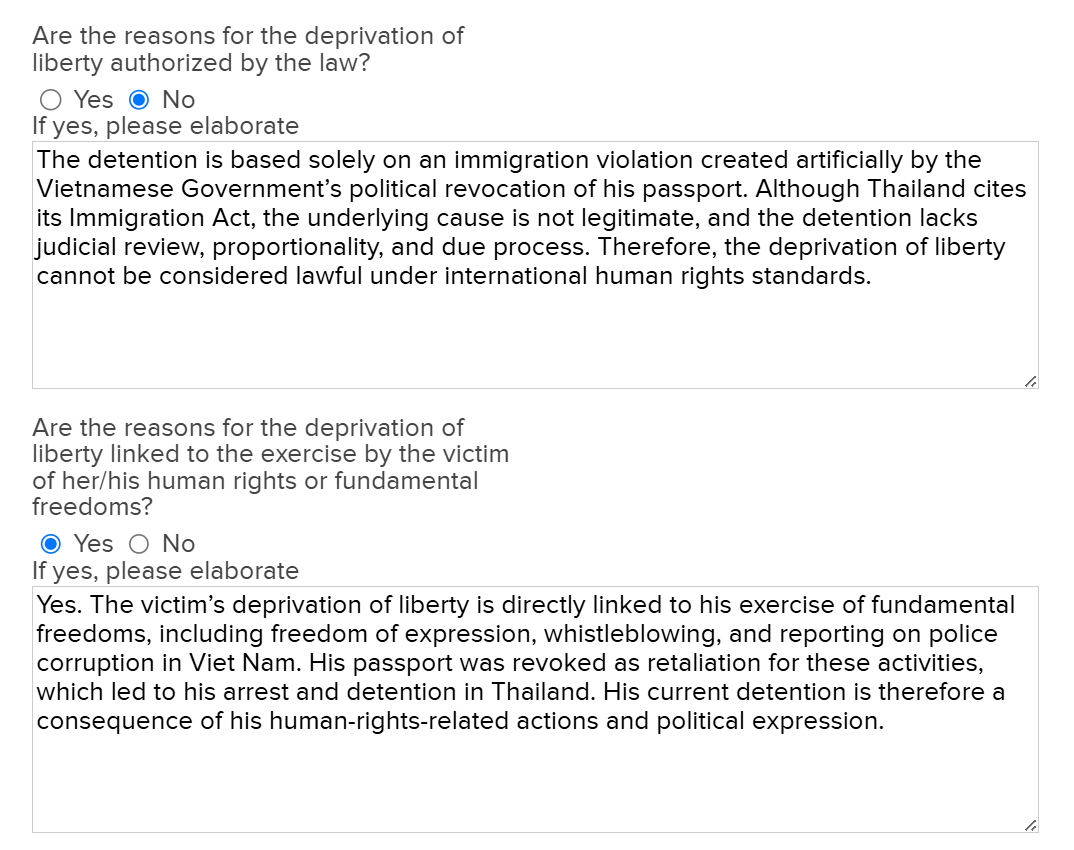
The detention is based solely on an immigration violation created artificially by the Vietnamese Government’s political revocation of his passport. Although Thailand cites its Immigration Act, the underlying cause is not legitimate, and the detention lacks judicial review, proportionality, and due process. Therefore, the deprivation of liberty cannot be considered lawful under international human rights standards.
Yes. The victim’s deprivation of liberty is directly linked to his exercise of fundamental freedoms, including freedom of expression, whistleblowing, and reporting on police corruption in Viet Nam. His passport was revoked as retaliation for these activities, which led to his arrest and detention in Thailand. His current detention is therefore a consequence of his human rights related actions and political expression.
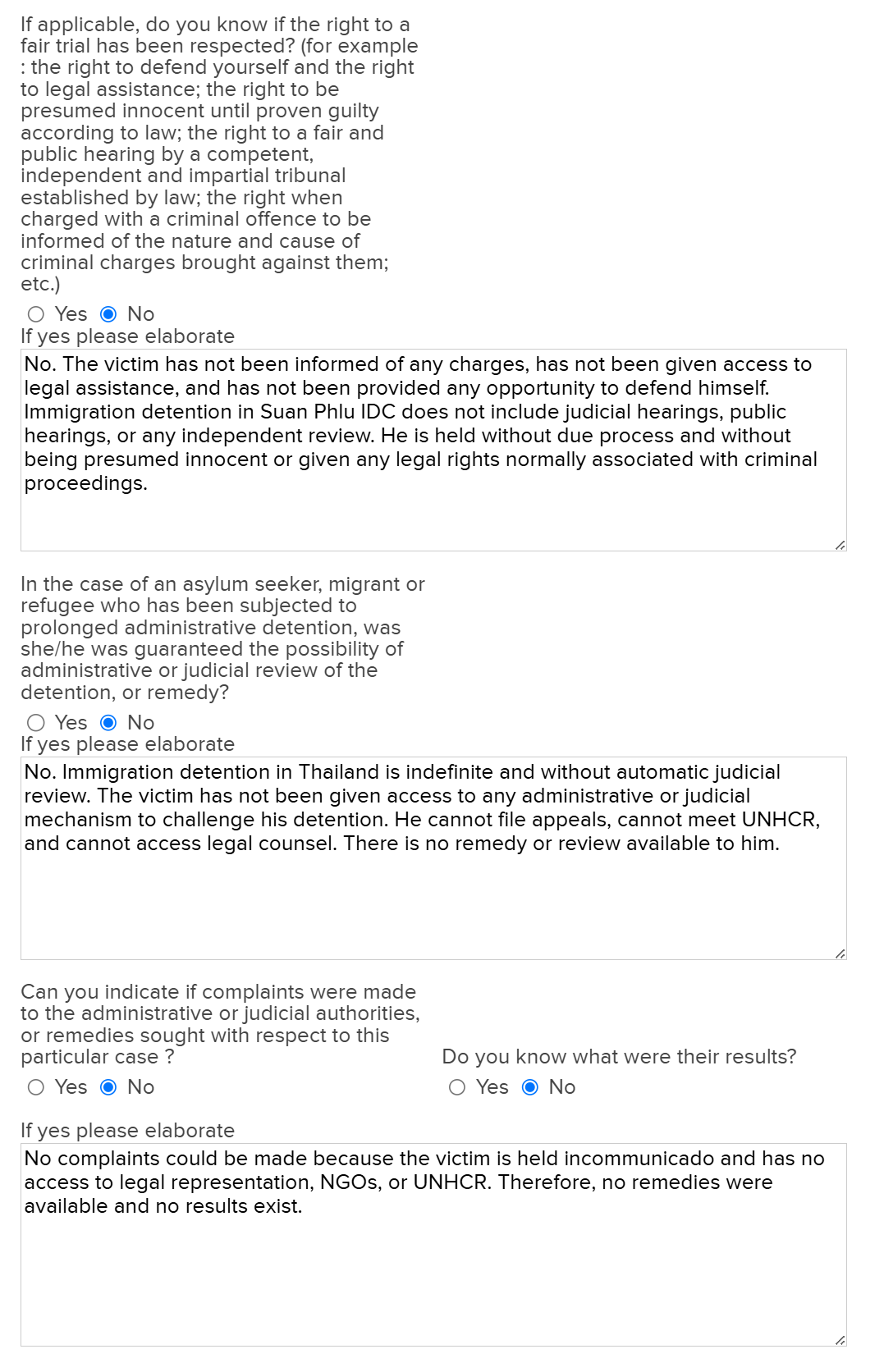
No. The victim has not been informed of any charges, has not been given access to legal assistance, and has not been provided any opportunity to defend himself. Immigration detention in Suan Phlu IDC does not include judicial hearings, public hearings, or any independent review. He is held without due process and without being presumed innocent or given any legal rights normally associated with criminal proceedings.
No. Immigration detention in Thailand is indefinite and without automatic judicial review. The victim has not been given access to any administrative or judicial mechanism to challenge his detention. He cannot file appeals, cannot meet UNHCR, and cannot access legal counsel. There is no remedy or review available to him.
No complaints could be made because the victim is held incommunicado and has no access to legal representation, NGOs, or UNHCR. Therefore, no remedies were available and no results exist.
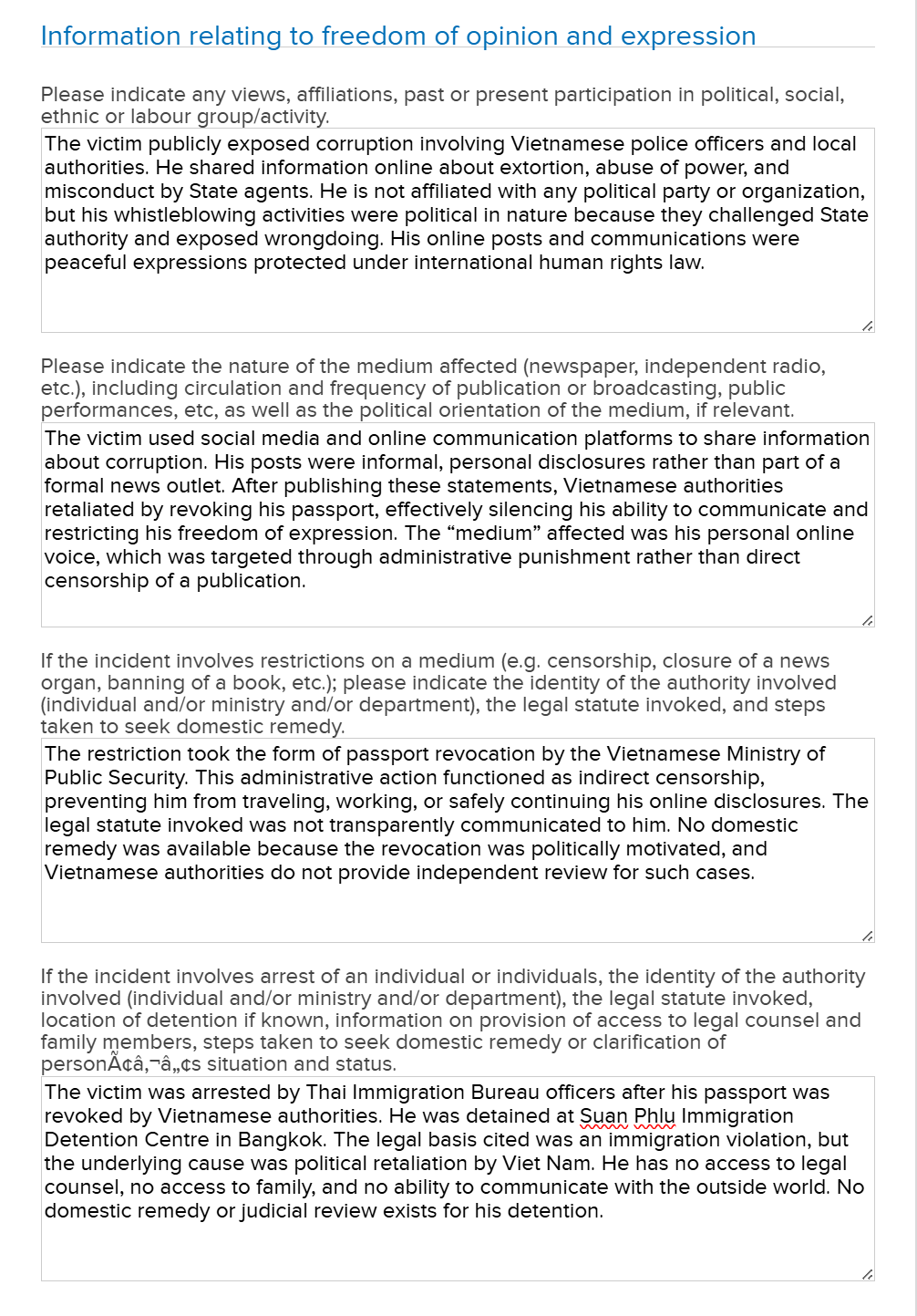
The victim publicly exposed corruption involving Vietnamese police officers and local authorities. He shared information online about extortion, abuse of power, and misconduct by State agents. He is not affiliated with any political party or organization, but his whistleblowing activities were political in nature because they challenged State authority and exposed wrongdoing. His online posts and communications were peaceful expressions protected under international human rights law.
information about corruption. His posts were informal, personal disclosures rather than part of a formal news outlet. After publishing these statements, Vietnamese authorities retaliated by revoking his passport, effectively silencing his ability to communicate and restricting his freedom of expression. The “medium” affected was his personal online voice, which was targeted through administrative punishment rather than direct censorship of a publication.
The restriction took the form of passport revocation by the Vietnamese Ministry of Public Security. This administrative action functioned as indirect censorship, preventing him from traveling, working, or safely continuing his online disclosures. The legal statute invoked was not transparently communicated to him. No domestic remedy was available because the revocation was politically motivated, and Vietnamese authorities do not provide independent review for such cases.
The victim was arrested by Thai Immigration Bureau officers after his passport was revoked by Vietnamese authorities. He was detained at Suan Phlu Immigration Detention Centre in Bangkok. The legal basis cited was an immigration violation, but the underlying cause was political retaliation by Viet Nam. He has no access to legal counsel, no access to family, and no ability to communicate with the outside world. No domestic remedy or judicial review exists for his detention.
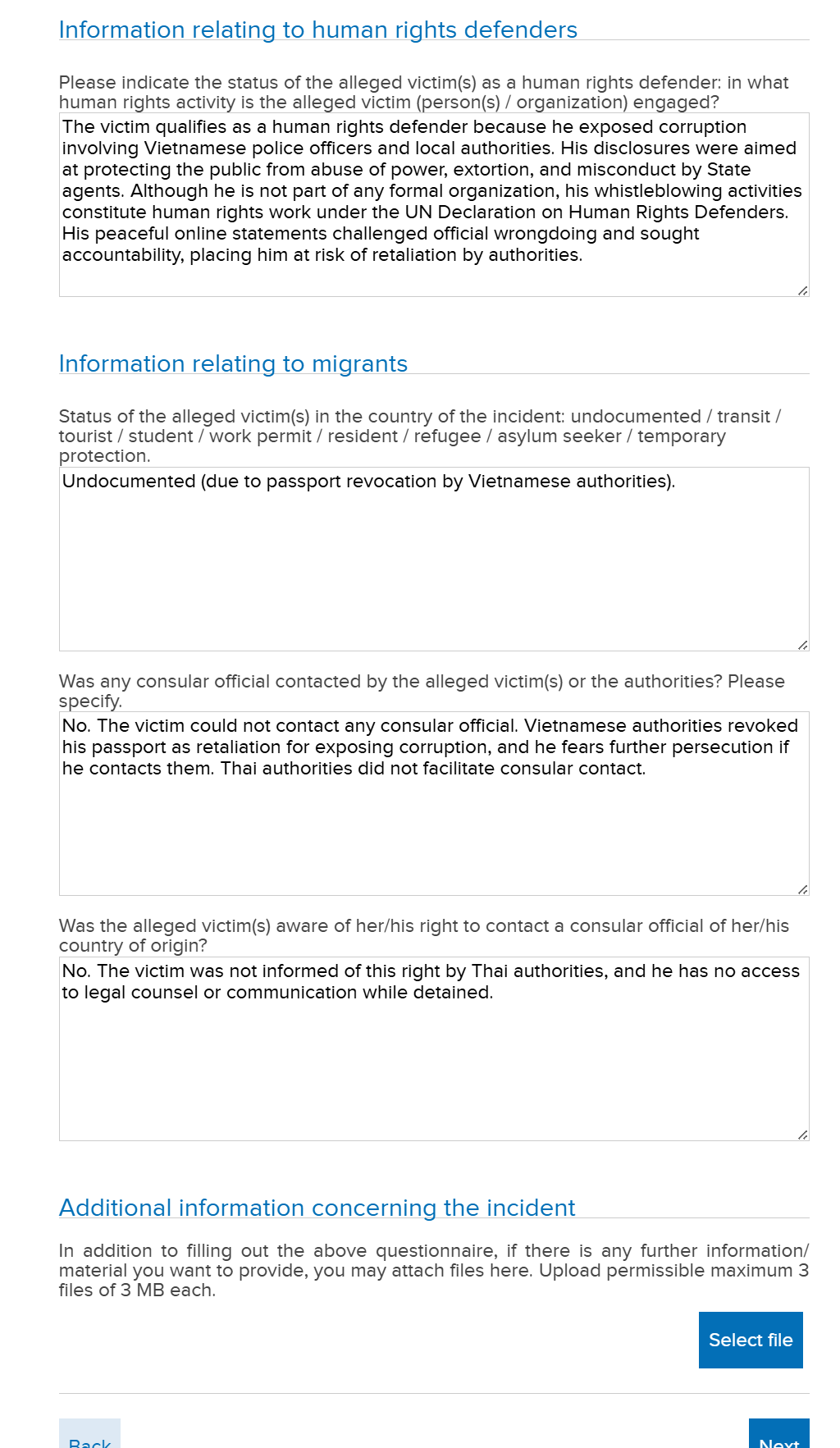
The victim qualifies as a human rights defender because he exposed corruption involving Vietnamese police officers and local authorities. His disclosures were aimed at protecting the public from abuse of power, extortion, and misconduct by State agents. Although he is not part of any formal organization, his whistleblowing activities constitute human rights work under the UN Declaration on Human Rights Defenders. His peaceful online statements challenged official wrongdoing and sought accountability, placing him at risk of retaliation by authorities.
Undocumented (due to passport revocation by Vietnamese authorities).
No. The victim could not contact any consular official. Vietnamese authorities revoked his passport as retaliation for exposing corruption, and he fears further persecution if he contacts them. Thai authorities did not facilitate consular contact.
No. The victim was not informed of this right by Thai authorities, and he has no access to legal counsel or communication while detained.
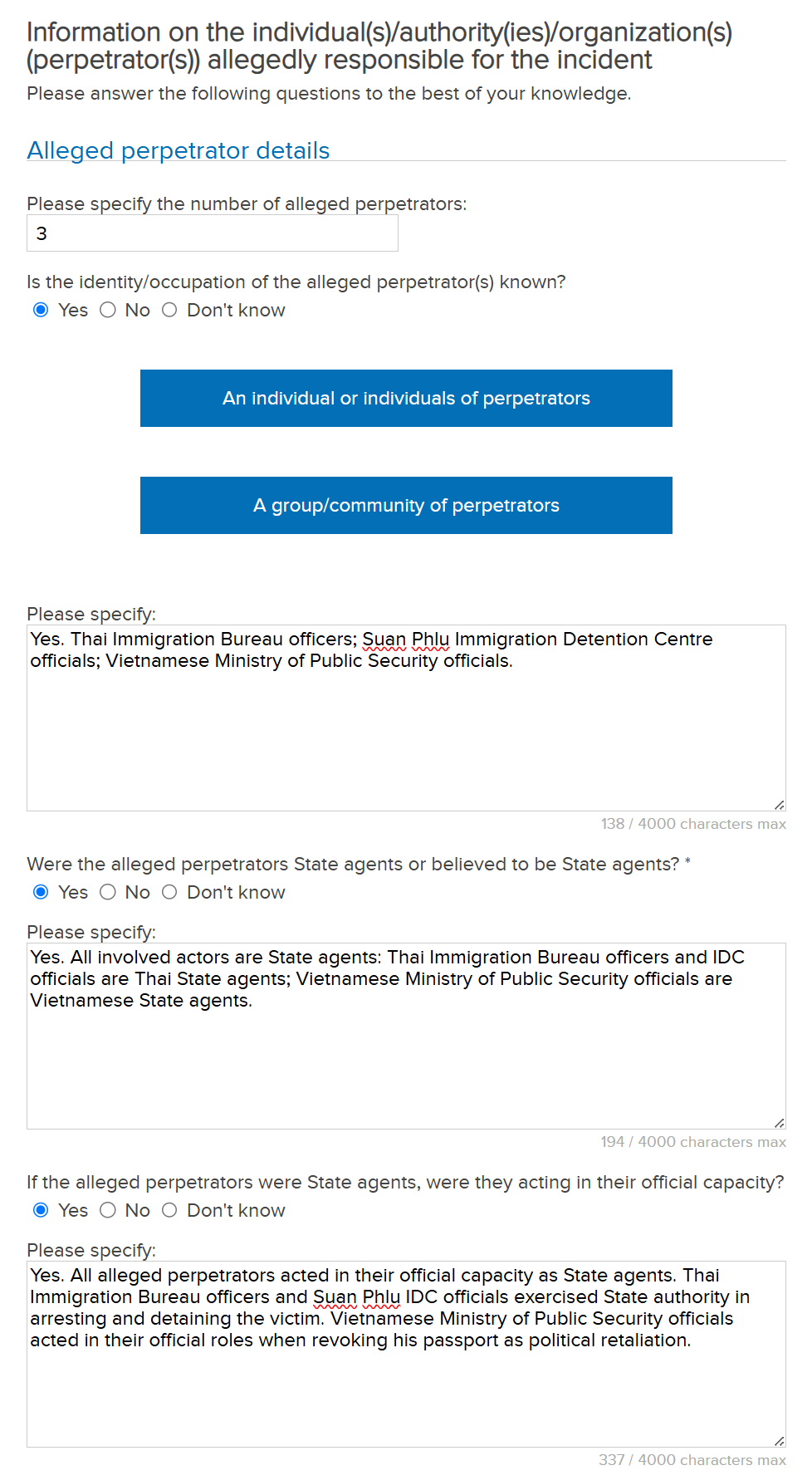
Yes. Thai Immigration Bureau officers; Suan Phlu Immigration Detention Centre officials; Vietnamese Ministry of Public Security officials.
Yes. All involved actors are State agents: Thai Immigration Bureau officers and IDC officials are Thai State agents; Vietnamese Ministry of Public Security officials are Vietnamese State agents.
Yes. All alleged perpetrators acted in their official capacity as State agents. Thai Immigration Bureau officers and Suan Phlu IDC officials exercised State authority in arresting and detaining the victim. Vietnamese Ministry of Public Security officials acted in their official roles when revoking his passport as political retaliation.
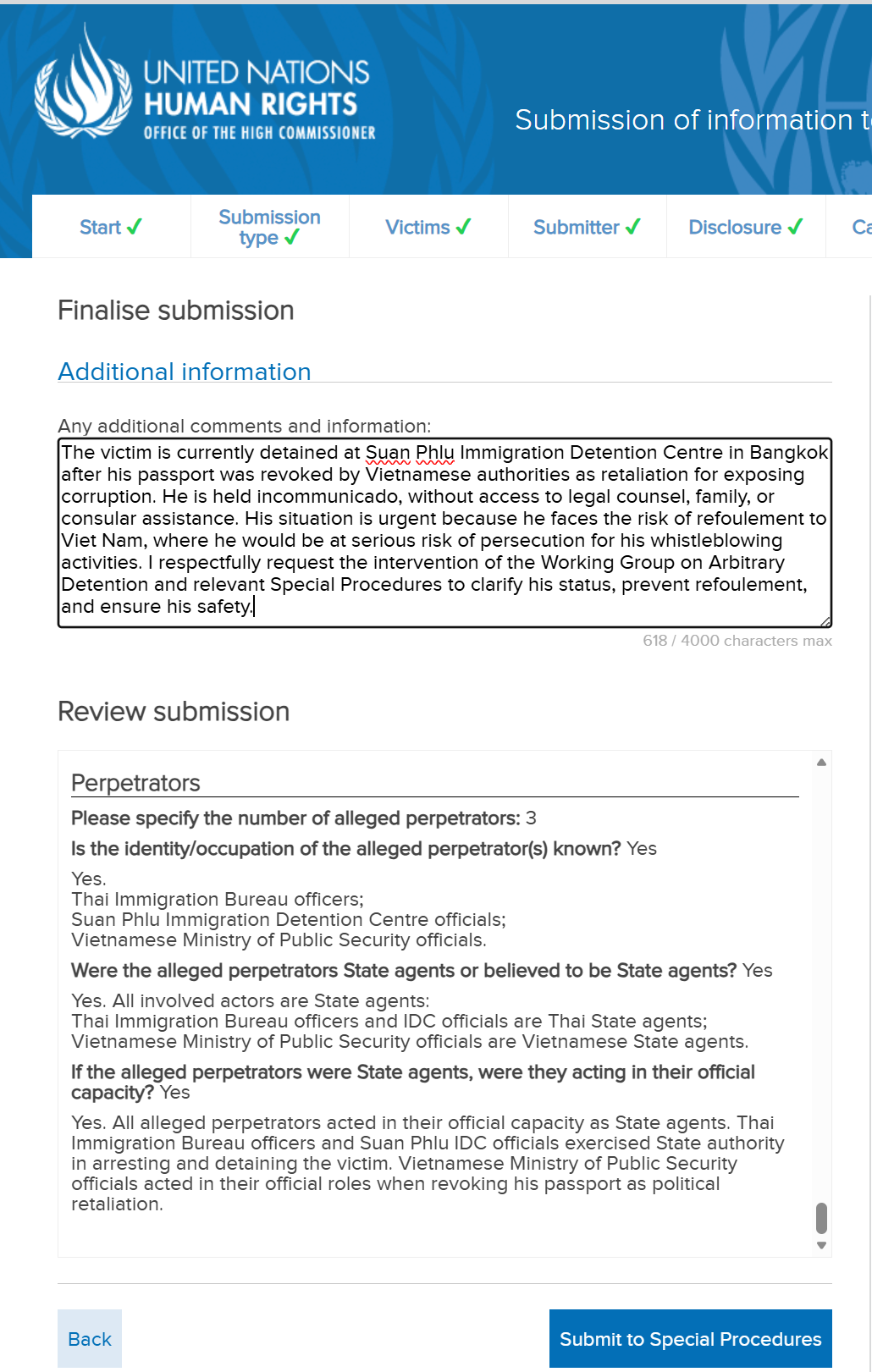
The victim is currently detained at Suan Phlu Immigration Detention Centre in Bangkok after his passport was revoked by Vietnamese authorities as retaliation for exposing corruption. He is held incommunicado, without access to legal counsel, family, or consular assistance. His situation is urgent because he faces the risk of refoulement to Viet Nam, where he would be at serious risk of persecution for his whistleblowing activities. I respectfully request the intervention of the Working Group on Arbitrary Detention and relevant Special Procedures to clarify his status, prevent refoulement, and ensure his safety.
MẪU HỒ SƠ:
TRUY CẬP MẪU HỒ SƠ (PDF)