

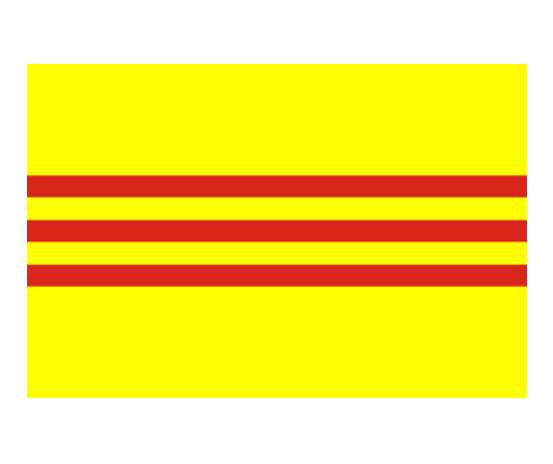

THE SHADOW WAR: VIET CONG COERCION AND TERROR
I. THE NIGHT VISITORS
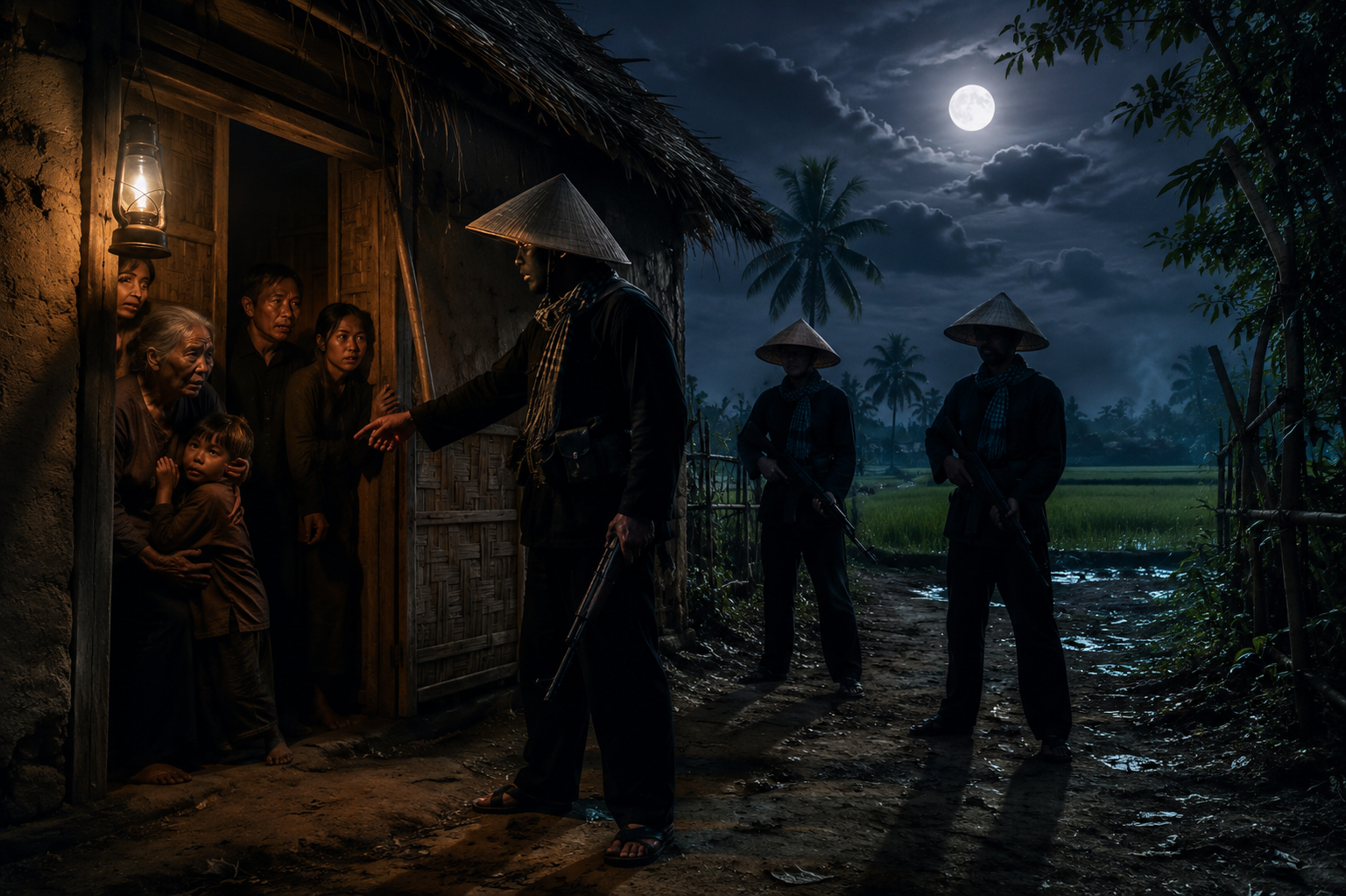
The villagers of Bình Hòa learned to fear the sound of footsteps after midnight.
It always began the same way: a soft knock, the kind that pretended to be polite, followed by the unmistakable click of a rifle bolt being drawn back.
A cadre stepped into the doorway, face half-hidden under a conical hat, eyes sharp with ideological certainty. Behind him, two fighters waited in silence — silhouettes against the moonlit rice fields.
They didn’t ask. They demanded.
Rice. Money. A son. A daughter. Loyalty.
The villagers complied because they knew the alternative. Those who hesitated were dragged into the square, accused of “betraying the Revolution,” and made examples of. No trial. No honour. Only fear.
The VC left before dawn, disappearing into the forest like ghosts, leaving behind trembling families and a village that understood one truth:
The Revolution ruled by terror, not by consent.
II. THE CADRE’S DOCTRINE
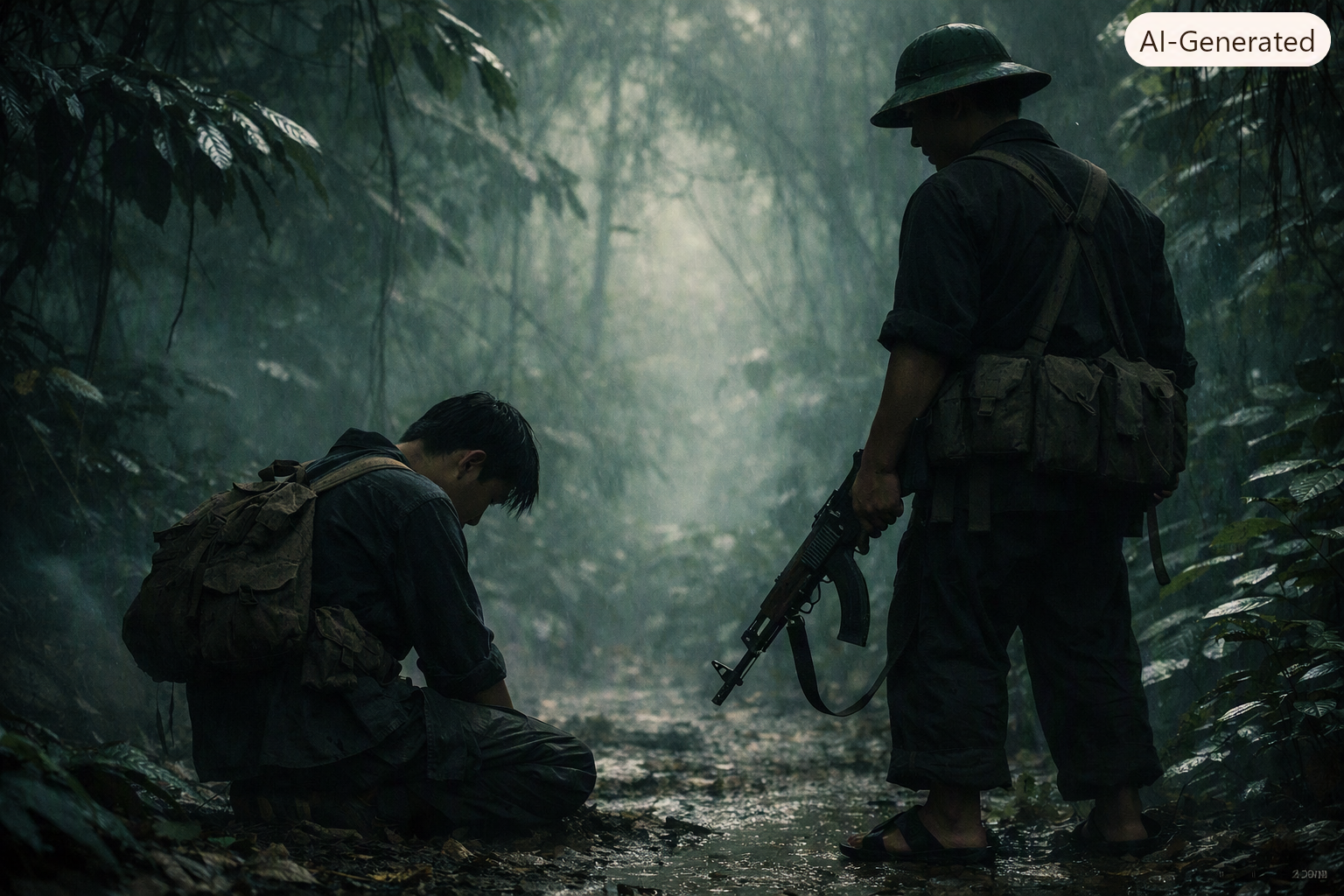
In the jungle, a small Vietcong unit retreated after a clash with Regional Forces. One fighter — barely sixteen — had taken a bullet in the leg. He begged to be carried.
The cadre knelt beside him, not with compassion, but with calculation.
A wounded fighter meant:
- slower movement
- risk of capture
- risk of interrogation
- risk of exposing safehouses
- risk of revealing names
- risk of compromising the entire cell
The cadre whispered to another soldier. The boy understood instantly. His eyes widened. He pleaded.
The jungle swallowed the sound.
This was not chaos. This was doctrine — a brutal utilitarian rule:
The individual is expendable. The cause is not.
There was no honour code. No warrior ethic. Only revolutionary necessity.
III. THE ASSASSINATION LIST
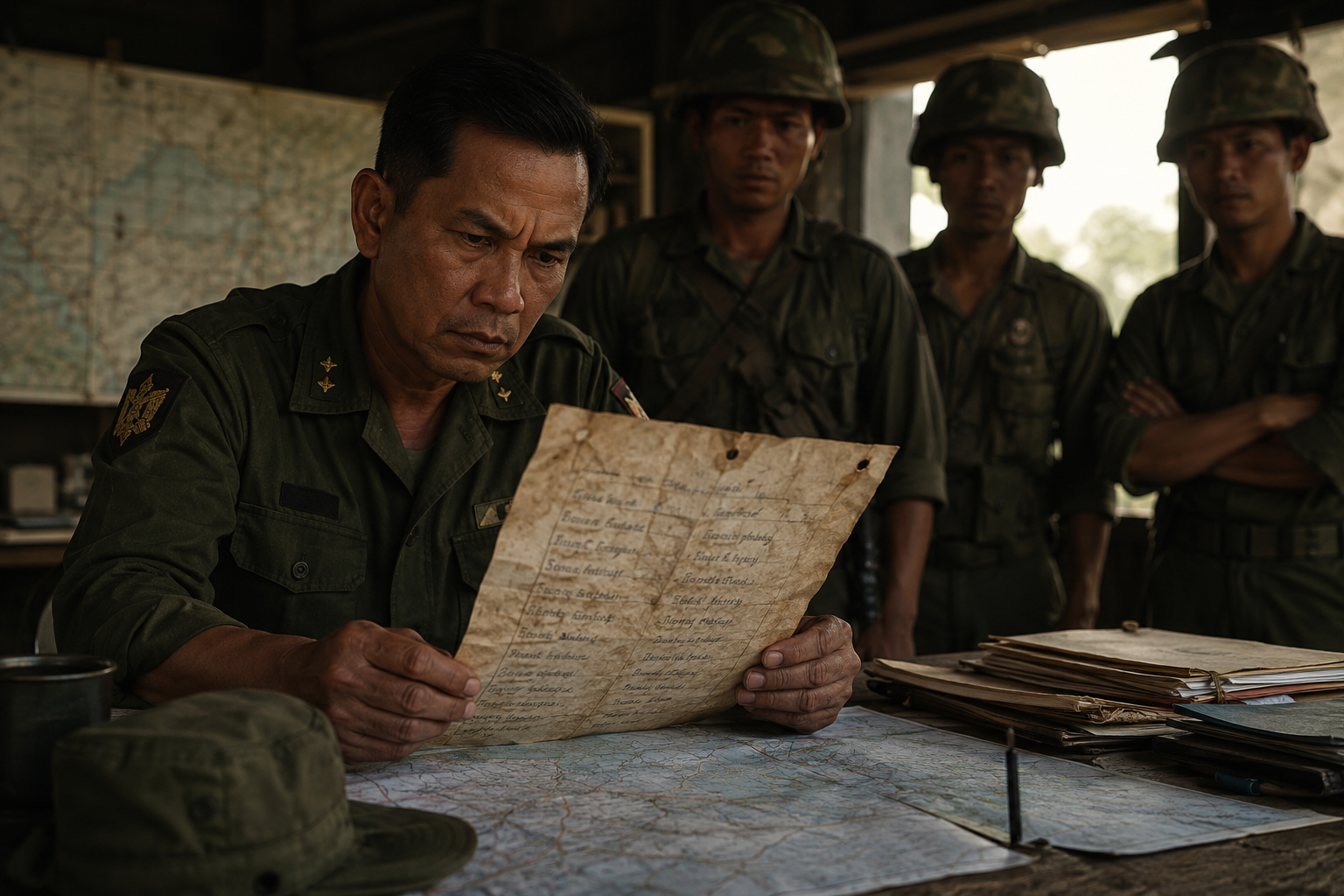
In the district headquarters of Phú Lộc, an ARVN officer unfolded a crumpled sheet of paper found pinned to a tree.
It was a list.
Names of village chiefs. Teachers. Nurses. Local officials. Anyone who had accepted government aid, medicine, or protection.
The VC called it “the list of reactionaries.” The villagers called it “the death list.”
Each name was marked for assassination. Not because they were soldiers. Not because they posed a threat. But because they represented order, structure, and state legitimacy — everything the insurgency sought to destroy.
The VC’s campaign was systematic:
- eliminate local leadership
- create power vacuums
- fill those vacuums with fear
- rule through intimidation
- break the spine of rural governance
This was banditry. This was political terror.
IV. THE MARKET BOMBING
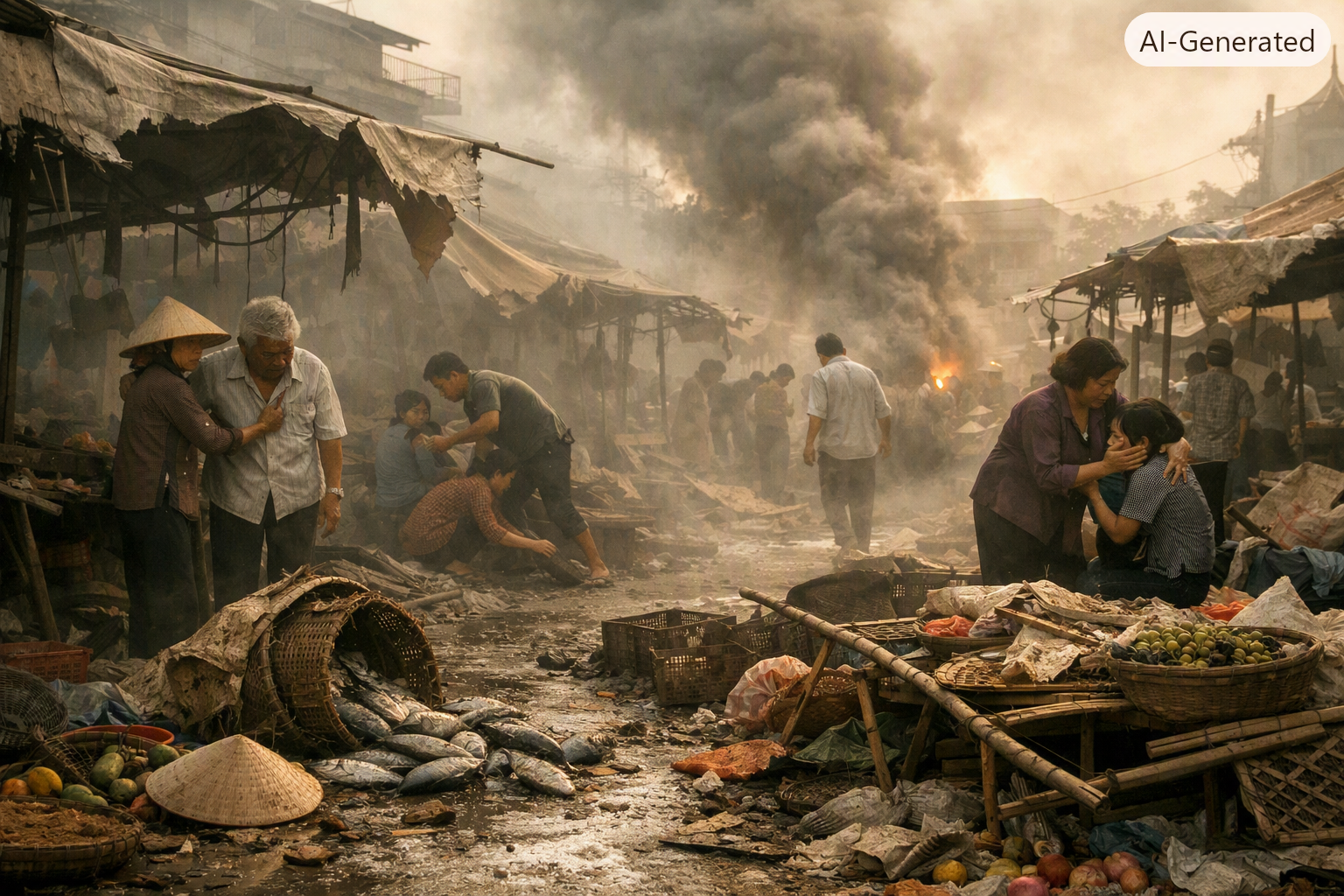
On a humid afternoon in Cần Thơ, the marketplace was alive with chatter. Women haggled over fish. Children chased each other between stalls. Old men smoked and argued about politics.
Then came the explosion.
A homemade charge, hidden under a vendor’s table, detonated without warning. The blast tore through the crowd, sending shockwaves of panic across the square.
The VC claimed it was aimed at “government collaborators.” But the victims were ordinary civilians — mothers, merchants, elders.
The message was clear:
No place is safe.
No life is guaranteed.
Fear is the Revolution’s strongest weapon.
V. THE SOLDIER WHO STOOD HIS GROUND
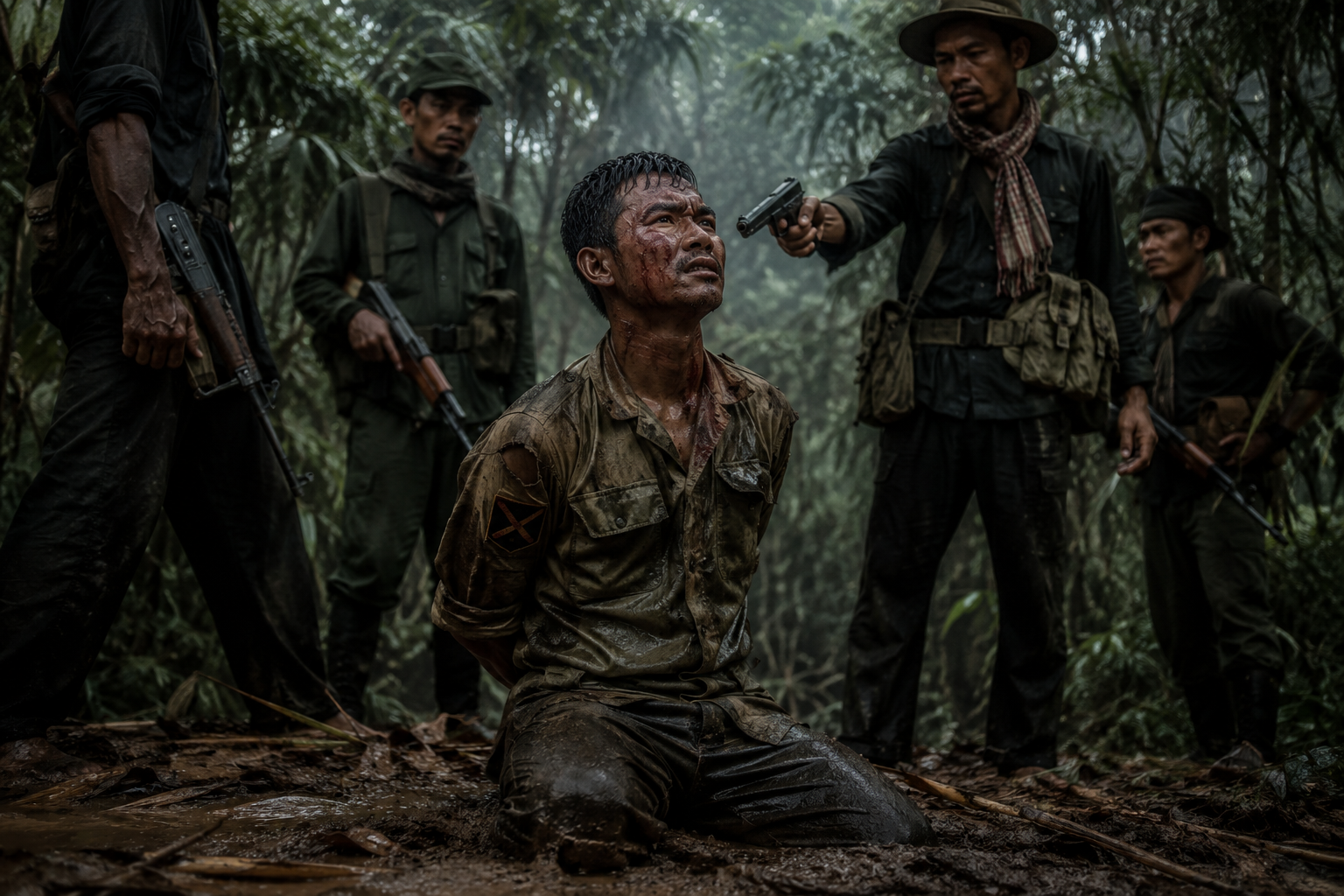
An ARVN corporal was captured during an ambush near Đức Phổ. The VC interrogators demanded names of his unit. He refused.
They threatened him. He refused.
They beat him. He refused.
They threatened his family. He refused.
Finally, they dragged him deeper into the forest. He never returned.
His unit remembered him as a man who held the line of honour even when surrounded by those who had none.
VI. THE VILLAGE THAT CHOSE COURAGE
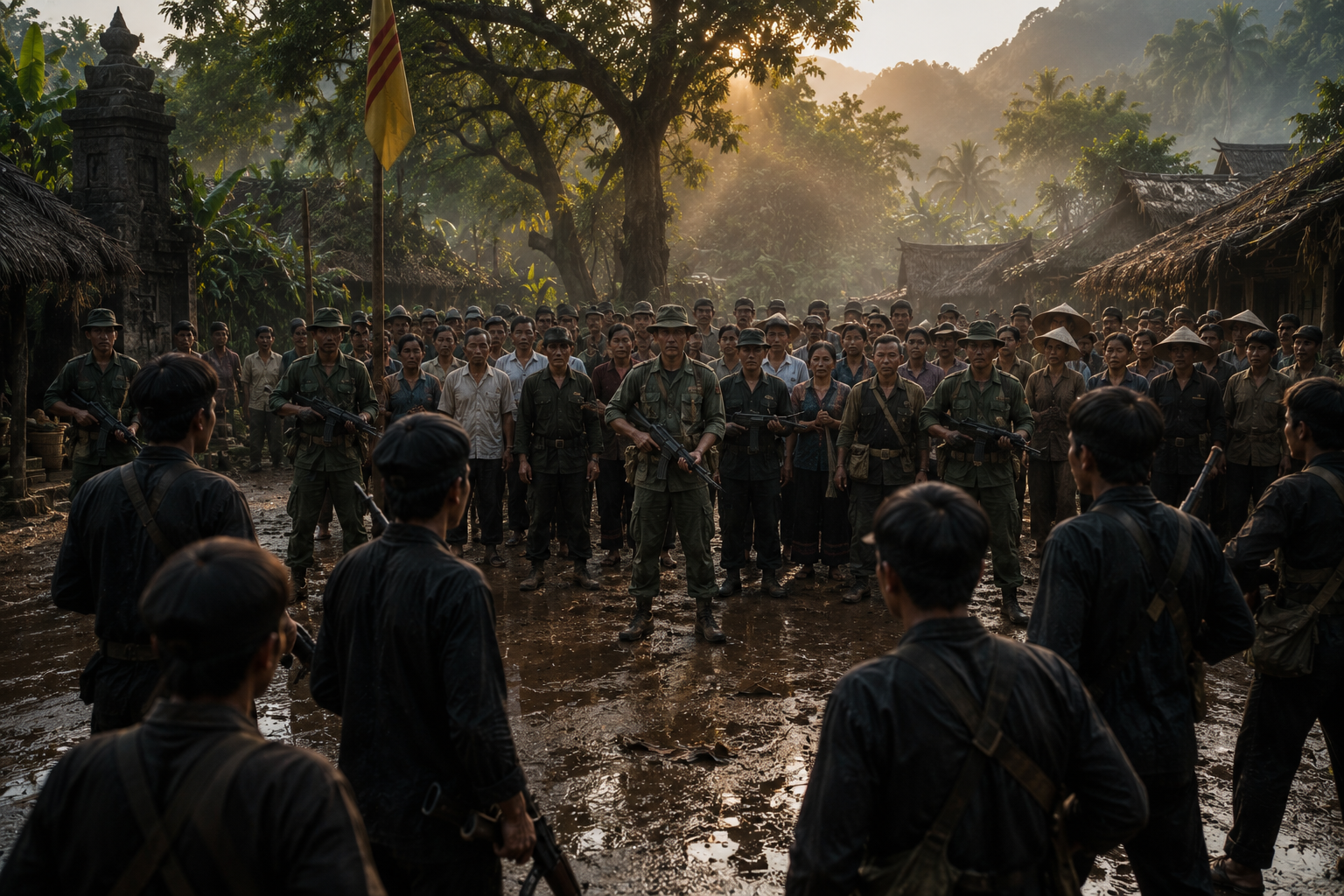
Months later, the VC returned to Phú Lộc, expecting obedience.
But something had changed.
The villagers had secretly contacted Regional Forces. They had decided that fear would no longer rule them.
When the VC entered the square, they found armed defenders waiting. Behind them stood villagers — not with weapons, but with resolve.
The VC fled into the forest. Their terror failed that night.
Because honour, once awakened, is stronger than fear.
VII. THE STRUCTURAL TRUTH
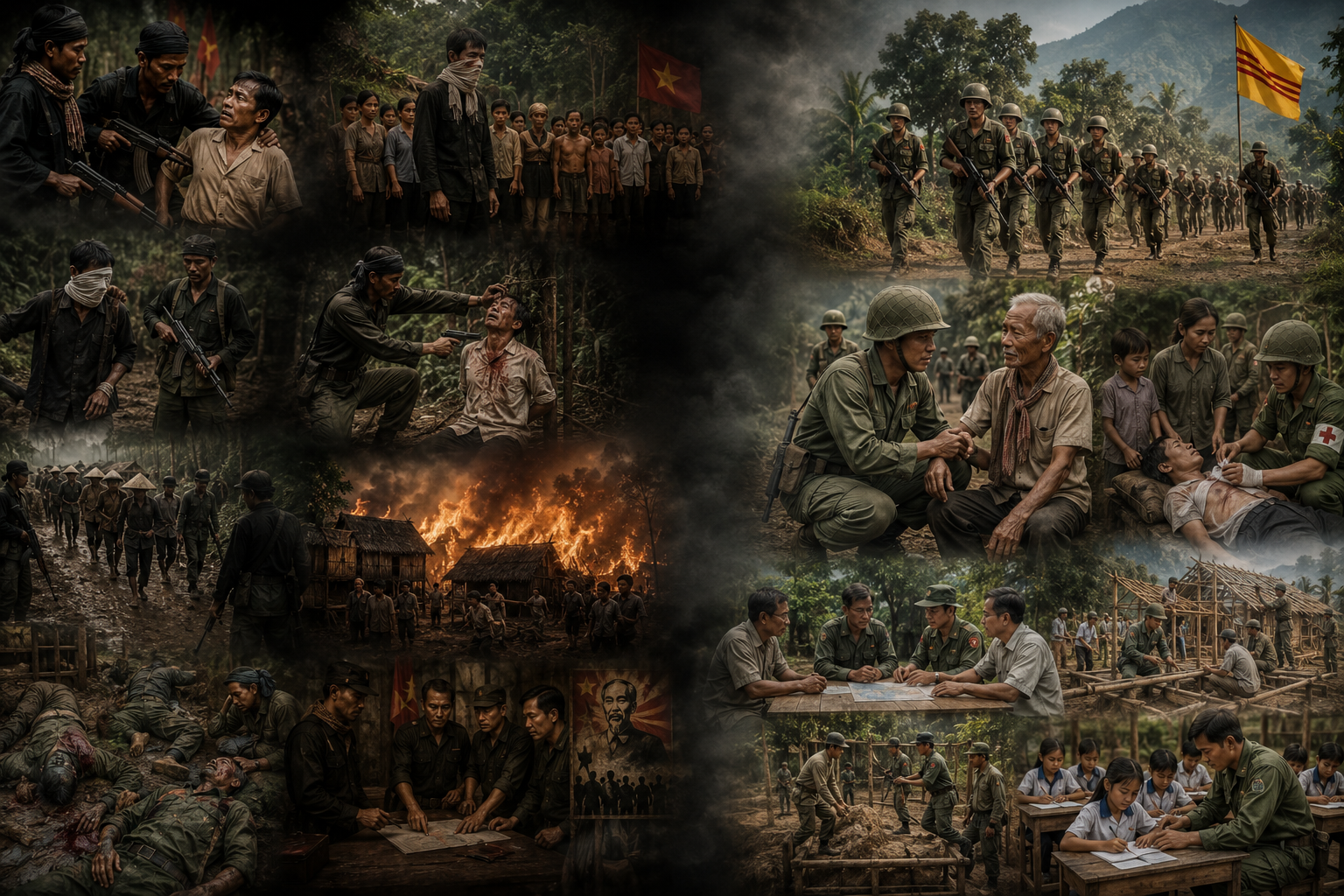
This reflects documented patterns of Viet Cong behavior:
- coercion of civilians
- assassinations of local leaders
- forced recruitment
- intimidation
- killing wounded fighters to avoid capture
- political terror as strategy
- psychological warfare
- suppression of dissent
- destruction of village governance
These actions were not honour-coded, and they violated humanitarian norms. They were part of a centralized insurgent strategy designed to destabilize South Vietnam and control rural populations through fear.
The contrast with the Republic of Vietnam structured, honour-based military ethics is stark:
The Army of Republic of Vietnam fought as a state military.
The VC fought as a coercive revolutionary apparatus.
One side upheld a code.
The other weaponized terror.