


THE NATIONAL FLAG – THE NATIONAL ANTHEM OF VIETNAM
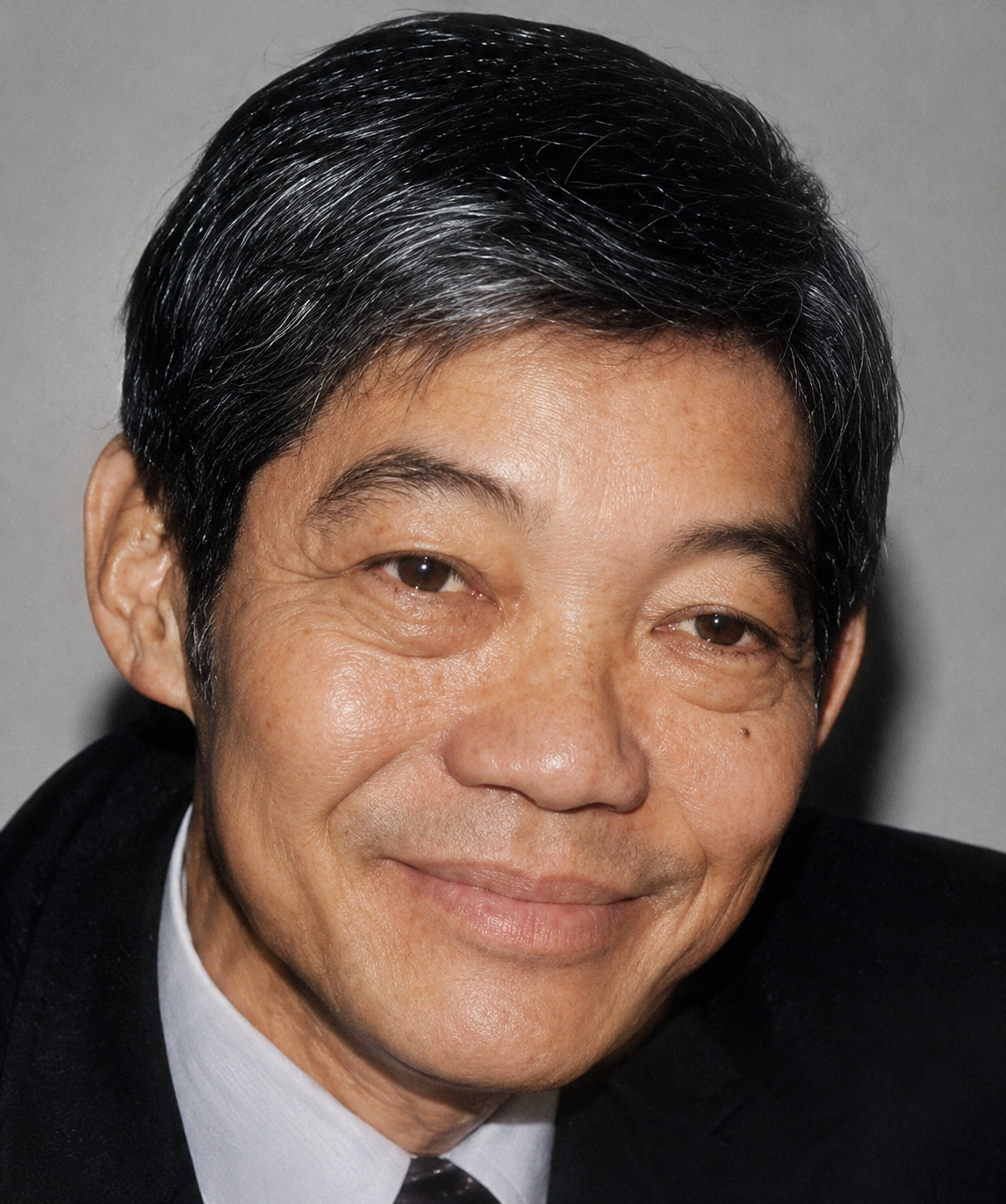
Prof. Nguyễn Ngọc Huy, Ph.D.
A/ THE EMERGENCE OF THE CONCEPT OF A NATIONAL ANTHEM IN HUMAN HISTORY
The concept of a national anthem emerged at approximately the same time as the concept of a national flag. Since ancient times, human societies have used pieces of music or songs to mark the presence of a ruling figure. In earlier times, however, under monarchies, such musical pieces or songs were regarded as the personal symbols of the king, members of the nobility, or representatives of the great clans that headed the community. In terms of content, they could be songs through which the ruling figure prayed to Heaven or the gods for protection, songs praising him, glorifying his achievements or those of his family, or songs describing a state of peace and prosperity, or the strength and prosperity of the community of which he was the ruler.
It was only with the French Revolution of 1789, when the nation came to be regarded as belonging to all the people living within the community, that a song was adopted as a common symbol for the entire citizenry. The French used the term “hymne national” to designate this type of song. The French concept was gradually adopted by other countries, and peoples belonging to English-speaking nations used the term “national anthem” when referring to the song representing their country. The French hymne national, or national anthem in English, has been translated by Vietnamese people as quốc thiều when emphasis is placed on the musical aspect, or quốc ca when emphasis is placed on the lyrics.
In terms of actual implementation, the first national anthem in the world was the Marseillaise of France. It was composed in 1792 by a French engineering captain named Rouget de Lisle, under the title Chant de Guerre pour l’Armée du Rhin (War Song for the Army of the Rhine). It subsequently became famous when a battalion of volunteer soldiers originating from the town of Marseille sang it while marching from Marseille to the capital, Paris, and it therefore acquired the popular name La Marseillaise. The song became widely popular throughout France from 1792, and in 1795 it was officially adopted as the national anthem of France.
After the French introduced the concept of a national anthem, many other countries adopted the concept and established national anthems of their own. In some cases, the national anthem was selected from a song that had previously been used to mark the presence of the king. Such was the case with God Save the King, or God Save the Queen when the head of state was a queen. This song had been used in England before the French Revolution, but it was not officially regarded as the national anthem of England until 1825.
B/ MUSICAL PIECES THAT APPEARED IN VIETNAM AS NATIONAL ANTHEMS AND NATIONAL ANTHEM MUSIC
1/ The First National Anthem: Đăng Đàn Cung of Emperor Bảo Đại
In Vietnam, as in other ancient monarchies, there had previously been musical pieces and songs used during solemn ceremonies to mark the presence of the king. As for the concept of a national anthem or national anthem music, it appeared in our country only after our nation fell under French colonial rule.
Nevertheless, throughout almost the entire period of French colonial rule, the Vietnamese people still did not have a national anthem or national anthem music. At that time, Cochinchina was a French colony, and during major ceremonies the musical piece used was the French Marseillaise. In Huế, the Nguyễn court had a number of musical pieces that were played when the emperor was present. However, these musical pieces were not national anthem music or national anthems in the modern sense of the terms.
It was not until the period of the Second World War that Emperor Bảo Đại established the national anthem music and national anthem at the same time as the national flag. This national anthem music and national anthem was Đăng Đàn Cung. It was a classical Vietnamese musical composition that had been used by the Huế court when the emperor proceeded to the Nam Giao Esplanade to represent all his subjects in performing the ceremony of worshipping Heaven. This ceremony was held once every three years and was regarded as the most important ceremony of the imperial court. Consequently, Đăng Đàn Cung was regarded as the most solemn musical composition. For this reason, Emperor Bảo Đại adopted it as the national anthem music and national anthem, while the long tinh flag was chosen as the national flag. Like the long tinh flag, Đăng Đàn Cung was used only within the territory of Đại Nam, namely Central Vietnam and Northern Vietnam. In Cochinchina, which was regarded as French territory, the Marseillaise still had to be used.
2/ The Second National Anthem: Việt Nam Minh Châu Trời Đông under the Government of Trần Trọng Kim
After Japan overthrew the French and Vietnam declared independence, the government of Trần Trọng Kim announced a program for national revival on May 8, 1945. As part of this program, Việt Nam Minh Châu Trời Đông by the composer Hùng Lân was selected as the national anthem. The lyrics of this musical composition are as follows:
Việt Nam, nước thiêng Tiên Rồng!
Non sông như gấm hoa uy linh một phương,
Xây vinh quang ngất cao bên Thái Bình Dương.
Từ ngàn xưa tài danh lừng lẫy khắp nơi.
Tiếng anh hùng tạc ghi núi sông muôn đời.
Máu ai còn vương cỏ hoa.
Giục đem tấm thân xẻ với sơn hà.
Giơ tay cương quyết,
Ta ôn lời thề ước.
Hy sinh tâm huyết,
Ta báo đền ơn nước.
Dầu thân này nát tan tành gói da ngựa cũng cam,
Thề trọn niềm trung thành với sơn hà nước Nam.
This national anthem was used together with the Ly Trigram Flag in Northern and Central Vietnam, but it was not used in Southern Vietnam because Southern Vietnam had been placed under direct Japanese control after the Japanese replaced the French. It was returned to the Huế court only when Emperor Bảo Đại was already about to abdicate. Therefore, during the period from the Japanese overthrow of the French until the Việt Minh Front consolidated its authority in Southern Vietnam, this entire territory had no national anthem. The song used by the nationalists in Southern Vietnam when they rose up to struggle for Vietnam’s independence at that time was Thanh Niên Hành Khúc, or Tiếng Gọi Thanh Niên, of the Thanh Niên Tiền Phong organization, together with that organization’s yellow flag with a red star. As we will explain below, the music of Thanh Niên Hành Khúc, or Tiếng Gọi Thanh Niên, is precisely the melody of the national anthem that we are using today.
3/ The Third National Anthem: Tiến Quân Ca of the Communist Party of Vietnam
When it seized power, the Communist Party of Vietnam used Tiến Quân Ca by the composer Văn Cao as its national anthem. This musical composition was first used by them when they organized their first armed units, and to this day they continue to use it as their national anthem.
4/ The National Anthem of the Republic of Cochinchina
When the Republic of Cochinchina was established in 1946, the leaders of the Cochinchina Autonomy movement adopted as its national anthem a musical setting of several opening lines from Chinh Phụ Ngâm Khúc, whose author was Professor Võ Văn Lúa, a secondary-school teacher during the French colonial period. Later, the Republic of Cochinchina adopted another musical composition, also by this professor, as its national anthem. But in both melody and lyrics, the later version was no better than the earlier one. These bizarre national anthems were truly fitting for the malaria-patterned flag used as the national flag of the Republic of Cochinchina. They became an object of ridicule among the people of Southern Vietnam at the time. Recalling them today, we do not know whether we should laugh or cry, because although they were exceedingly ridiculous, they were used as symbols of an organization opposed to the national unity of Vietnam and caused much suffering and death to those who struggled for that unity.
5/ Our National Anthem Today
Our present national anthem has a particularly distinctive history. The composer of the melody was Lưu Hữu Phước, a former student of Pétrus Ký Secondary School and a former student of the University of Hanoi. If I am not mistaken, this melody was composed when Lưu Hữu Phước was still studying at Pétrus Ký School. In 1942, he was a student at the University of Hanoi. During the Second World War, this university was the only university in all of Indochina. It had approximately 800 students, half of whom were Vietnamese, while the remainder were Khmer, Lao, French, and even people from some neighboring countries such as China and other Southeast Asian countries.
Because it was the only university in Indochina, the University of Hanoi brought together all the Vietnamese students of that period. Patriotic students who joined revolutionary political parties struggling for Vietnam’s independence organized secret groups there. In particular, the Đại Việt Quốc Dân Đảng, whose party leader was Trương Tử Anh, had a key cadre, Mr. Nguyễn Tôn Hoàn, studying at the University of Hanoi during the Second World War. Mr. Nguyễn Tôn Hoàn was highly skilled in music and was therefore elected Head of the Music Committee of the General Association of Indochinese Students (Association Générale des Étudiants Indochinois). He was entrusted with the secret task of guiding students in cultural activities oriented toward the struggle against colonialism.
On the afternoon of March 15, 1942, the General Association of Indochinese Students (THSVĐD) organized a singing performance at the Great Lecture Hall of the University of Hanoi to raise money to help poor patients at hospitals used as training facilities for medical and pharmaceutical students. The Vietnamese students who played an active role in the Association decided to use this opportunity to introduce a special musical composition called Sinh Viên Hành Khúc, known in French as Marche des Étudiants. Mr. Nguyễn Tôn Hoàn was entrusted with selecting the music to be used for this purpose. At that time, Lưu Hữu Phước had given him a number of musical compositions that he had written. Mr. Nguyễn Tôn Hoàn found that, among all of Lưu Hữu Phước’s drafts, the melody that we currently use as our national anthem music had the strongest character for stirring the spirit of struggle, and therefore selected it as the music for Sinh Viên Hành Khúc.
Afterward, a committee was established to write lyrics for this melody, consisting of Đặng Ngọc Tốt, Mai Văn Bộ, Huỳnh Văn Tiểng, Phan Thanh Hòa, and Hoàng Xuân Nhị. The lyrics consisted of three sections with a common refrain:
I.
Ðồng lòng cùng đi, đi, mở đường khai lối.
Vì non sông nước xưa, truyền muôn năm chớ quên,
Nào anh em Bắc Nam! Cùng nhau ta kết đoàn!
Hồn thanh xuân như gương trong sáng,
Ðừng tiếc máu nóng, tài xin ráng!
Thời khó, thế khó, khó làm yếu ta,
Dầu muôn chông gai vững lòng chi sá.
Ðường mới kíp phóng mắt nhìn xa bốn phương,
Tung cánh hồn thiếu niên ai đó can trường.
(Ðiệp khúc)
Sinh viên ơi! Ta quyết đi đến cùng!
Sinh viên ơi! Ta thề đem hết lòng!
Tiến lên đồng tiến! Vẻ vang đời sống!
Chớ quên rằng ta là giống Lạc Hồng!
II.
Hùng cường trời Nam, ghi trên bảng vàng bia đá!
Lùa quân Chiêm nát tan, thành công Nam tiến luôn,
Bình bao phen Tống Nguyên, từng ca câu khải hoàn.
Hồ Tây tranh phong oai son phấn,
Lừng tiếng Sát Thát Trần Quốc Tuấn.
Mài kiếm cứu nước nhớ người núi Lam,
Trừ Thanh, Quang Trung giết hằng bao đám.
Nòi giống có khí phách từ xưa chớ quên,
Mong đến ngày vẻ vang, ta thắp hương nguyền.
(Trở lại điệp khúc)
III.
Hành trình còn xa, chúng ta phải cùng nhau gắng!
Ngày xưa ai biết đem tài cao cho núi sông,
Ngày nay ta cũng đem lòng son cho giống dòng.
Là sinh viên vun cây văn hoá,
Từ trước sẵn có nhiều hoa lá.
Ðời mới kiến thiết đáp lòng những ai
Hằng mong ta ra vững cầm tay lái.
Bền chí quyết cố gắng làm cho khắp nơi
Vang tiếng người nước Nam cho đến muôn đời!
(Trở lại điệp khúc)
The Vietnamese lyrics presented above were used for Vietnamese students and were intended to encourage the Vietnamese people to fight for Vietnam and its national cause.
However, as mentioned above, since the University of Hanoi at that time also had many students who were not Vietnamese, in addition to the Vietnamese lyrics, French lyrics were also written so that all students of the University could use the song. Naturally, these French lyrics could not speak exclusively about Vietnam; they had to refer to all of Indochina in order to be consistent with the name of the General Association of Indochinese Students (THSVĐD).
The French lyrics were also composed by the committee mentioned above:
Pressant et fort, retentit dans l’espace.
Des côtes d’Annam aux ruines d’Angkor,
À travers les monts, du sud jusqu’au nord,
Une voix monte ravie:
Servir la chère Patrie!
Toujours sans reproche et sans peur
Pour rendre l’avenir meilleur.
La joie, la ferveur, la jeunesse
Sont pleines de femmes promesses.
(Ðiệp khúc)
Te servir, chère Indochine,
Avec coeur et discipline,
C’est notre but, c’est notre loi
Et rien n’ébranle notre foi!
The singing performance on the afternoon of March 15, 1942, produced highly successful results, and Sinh Viên Hành Khúc, whose French title was Marche des Étudiants, was officially recognized as the musical composition of the General Association of Indochinese Students (THSVĐD). In the summer of that year, the Association organized a graduation ceremony at the Hanoi Opera House. This time, the Governor-General of Indochina and many other high-ranking French officials attended. Sinh Viên Hành Khúc was performed by the orchestra of the French Navy. Its stirring and heroic melody moved everyone, and when it was played, everyone attending the 1942 graduation ceremony of the University of Hanoi, including the high-ranking French officials, stood solemnly to salute it. After that, the song was disseminated widely.
The French, Khmer, and Lao students naturally used the French lyrics. Among the Vietnamese students, those who were concerned only with their studies and had no particular enthusiasm for political fight also knew only the French lyrics. Vietnamese students who were enthusiastic about fighting for our nation’s independence, however, spread the song throughout all three regions of Vietnam during the summer vacation that year, using the Vietnamese lyrics, especially Section I mentioned above. Therefore, from 1943 onward, Sinh Viên Hành Khúc was known by Vietnamese people throughout all three regions.
In 1945, after Japan overthrew the French, Thanh Niên Tiền Phong was established in Southern Vietnam and adopted the above melody as its organizational anthem. The title of the composition was changed to Thanh Niên Hành Khúc or Tiếng Gọi Thanh Niên. As for the lyrics, the two words “sinh viên” (“students”) were replaced by the two words “thanh niên” (“youth”). When the French returned to occupy Southern Vietnam at the end of 1945, Thanh Niên Tiền Phong mobilized Vietnamese patriots in Southern Vietnam to rise up against them under the yellow flag with the red star and the song Thanh Niên Hành Khúc, or Tiếng Gọi Thanh Niên.
In 1948, at the historic meeting in Hong Kong between former Emperor Bảo Đại and a number of prominent figures and representatives of political organizations and religious groups in Vietnam, Mr. Nguyễn Tôn Hoàn proposed adopting the melody of Thanh Niên Hành Khúc as the national anthem music of the State of Vietnam. The conference agreed, and the title of the composition was changed to Quốc Dân Hành Khúc or Tiếng Gọi Công Dân. As for the lyrics, Section I of the aforementioned Thanh Niên Hành Khúc was used, with the two words “công dân” (“citizens”) replacing the two words “thanh niên” (“youth”).
On June 2, 1948, the provisional government of Vietnam was established with General Nguyễn Văn Xuân as Prime Minister, and Quốc Dân Hành Khúc, or Tiếng Gọi Công Dân, was officially adopted as the national anthem. When Mr. Ngô Đình Diệm deposed Head of State Bảo Đại in order to establish a republican regime, the Constituent Assembly elected in 1956 considered the question of selecting a different national anthem. However, at that time, most of the musical compositions proposed as national anthems did not meet the standards required for acceptance. The only composition considered worthy of serving as the national anthem was Việt Nam Minh Châu Trời Đông by composer Hùng Lân, which had been selected as the national anthem by the government of Trần Trọng Kim in 1945. Nevertheless, the two brothers Ngô Đình Diệm and Ngô Đình Nhu ultimately refused to accept Việt Nam Minh Châu Trời Đông as the national anthem for a particular reason.
In 1945, the two parties, the Việt Nam Quốc Dân Đảng (VNQDĐ) and the Đại Việt Quốc Dân Đảng (ĐVQDĐ), merged into a single organization under the common name Quốc Dân Đảng, and this Party adopted Việt Nam Minh Châu Trời Đông as its party anthem. Later, the VNQDĐ and ĐVQDĐ separated again, but both retained Việt Nam Minh Châu Trời Đông as their party anthem. Knowing this, the two brothers, Mr. Diệm and Mr. Nhu, refused to accept this composition as the national anthem. Ultimately, the Constituent Assembly in 1956 decided to retain Quốc Dân Hành Khúc, or Tiếng Gọi Công Dân, as the national anthem, but changed the lyrics as follows:
Ðồng lòng cùng đi, hy sinh tiếc gì thân sống!
Vì tương lai quốc dân, cùng xông pha khói tên,
Làm sao cho núi sông từ nay luôn vững bền.
Dầu cho thây phơi trên gươm giáo,
Thù nước lấy máu đào đem báo.
Nòi giống lúc biến phải cần giải nguy,
Người công dân luôn vững bền tâm trí,
Hùng tráng quyết chiến đấu làm cho khắp nơi
Vang tiếng người nước Nam cho đến muôn đời!
(Ðiệp khúc)
Công dân ơi! Mau hiến thân dưới cờ!
Công dân ơi! Mau làm cho cõi bờ
Thoát cơn tàn phá, vẻ vang đời sống
Xứng danh ngàn năm dòng giống Lạc Hồng.
This musical composition and its lyrics were used throughout the First and Second Republics until the present day.
C/ THE QUESTION OF CHANGING THE NATIONAL ANTHEM
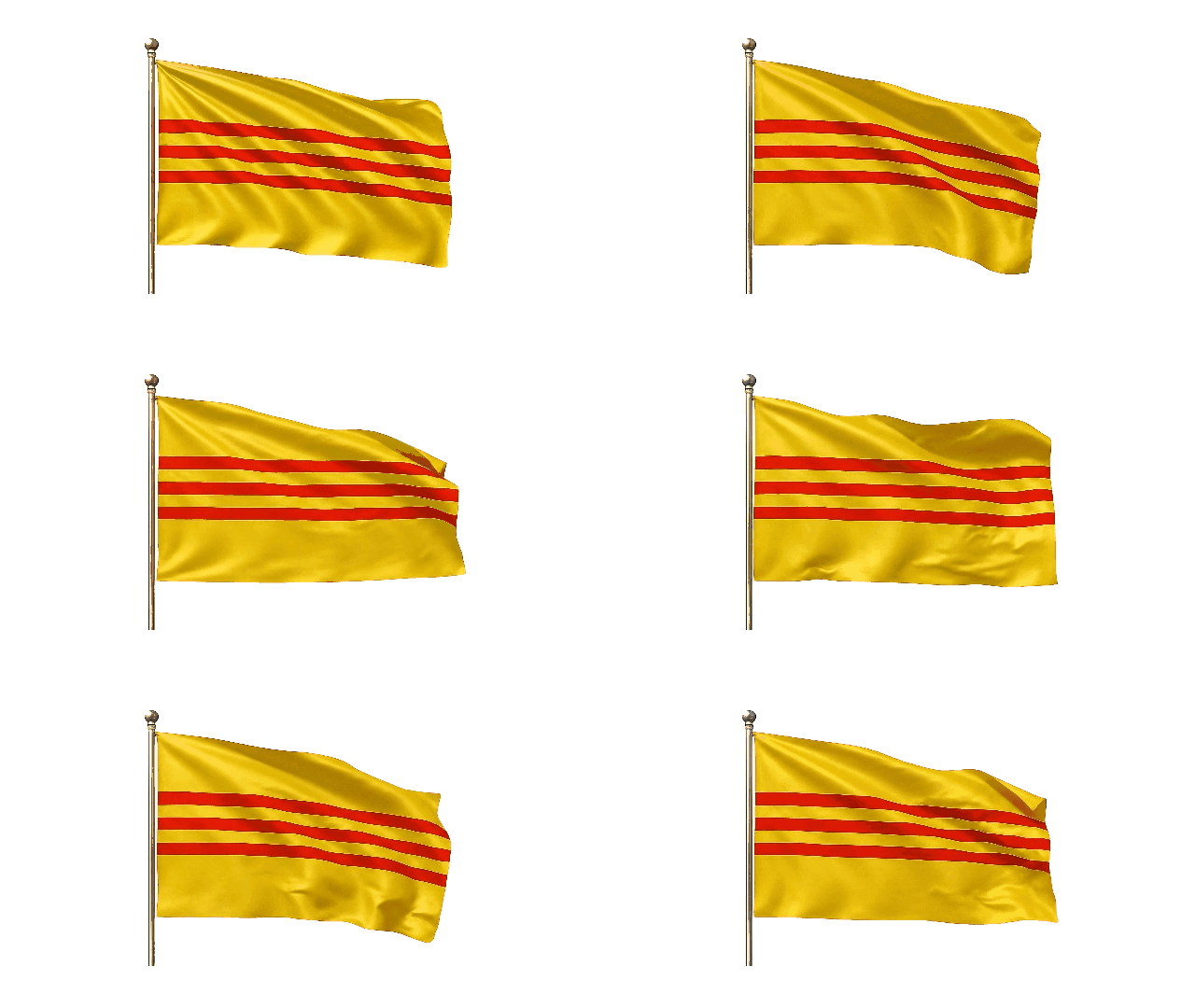
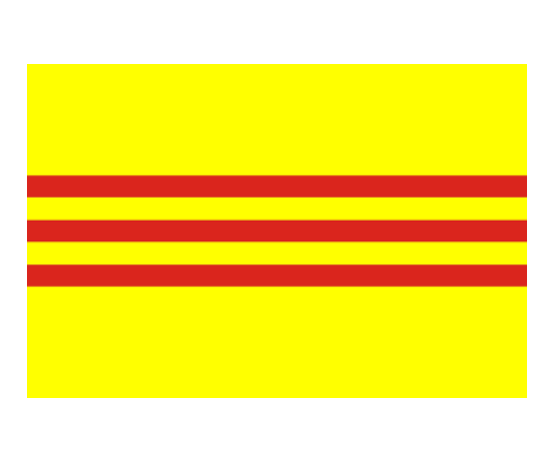
In summary, apart from the unremarkable musical compositions that were used as national anthems by the Republic of Cochinchina, but which in reality cannot be regarded as national anthems, the Vietnamese nation has had a total of four musical compositions worthy of the name of national anthem: Đăng Đàn Cung, Việt Nam Minh Châu Trời Đông, Tiến Quân Ca, and Quốc Dân Hành Khúc or Tiếng Gọi Công Dân. These four national anthems were used alongside four national flags: Đăng Đàn Cung with the long tinh flag, Việt Nam Minh Châu Trời Đông with the Ly Trigram Flag, Tiến Quân Ca with the red flag with the yellow star, and Quốc Dân Hành Khúc or Tiếng Gọi Công Dân with the Yellow Flag with Three Red Stripes.
1/ Comparison of the National Anthems
Đăng Đàn Cung is a classical Vietnamese musical composition belonging to the genre of nhã nhạc. This type of music is solemn and restrained in character, in contrast to dâm nhạc, a type of music that expresses emotions passionately and is used only for entertainment or festive gatherings. Đăng Đàn Cung is a piece of nhã nhạc used during the Nam Giao ceremony of the king. Therefore, it has a solemn character, but it is neither heroic nor capable of stirring the spirit of its listeners.
Việt Nam Minh Châu Trời Đông is a piece of modern music that is more stirring than Đăng Đàn Cung, but its grandeur is of a deep and solemn type, and therefore it does not stir the spirit of its listeners as strongly as Quốc Dân Hành Khúc or Tiếng Gọi Công Dân. Because it is a marching song, our present national anthem stirs the spirit of its listeners much more powerfully. Furthermore, historical circumstances caused it to play an active role in the fight for the independence and freedom of the Vietnamese nation. During the Second World War, under the name Sinh Viên Hành Khúc, it was used to awaken the Vietnamese people's spirit to fight for our nation. When the French brought troops to reoccupy Southern Vietnam, under the name Thanh Niên Hành Khúc or Tiếng Gọi Thanh Niên, it was used to encourage fighters carrying sharpened bamboo poles to rise up and fight against the French Expeditionary Army. When France officially recognized Vietnam's independence and unity, it became the national anthem under the name Quốc Dân Hành Khúc or Tiếng Gọi Công Dân.
The Tiến Quân Ca of the Communist Party of Vietnam likewise has a character that stirs the spirit of its listeners, just as our national anthem does. But in terms of its lyrics, from Sinh Viên Hành Khúc through Thanh Niên Hành Khúc to Quốc Dân Hành Khúc, our national anthem goes no further than speaking of “taking the enemy's blood to repay the nation's hatred,” whereas Tiến Quân Ca, with the words “swear to tear apart the bodies and drink the blood of the enemy,” is clearly too bloodthirsty and may cause the world to regard the Vietnamese people as barbaric.
Politically, Thanh Niên Hành Khúc was used to encourage patriotic young people in Southern Vietnam, carrying sharpened bamboo poles, to oppose the French Expeditionary Army, whereas Tiến Quân Ca was played to welcome this same army when it landed in Northern Vietnam under the agreement with Hồ Chí Minh in the Preliminary Agreement of March 6, 1946. Later, it was used when Việt Minh troops and French troops cooperated through the Vietnamese-French Joint Inspection Commission to attack the bases of the Đại Việt Quốc Dân Đảng, the Việt Nam Quốc Dân Đảng, and the Việt Nam Cách Mạng Đồng Minh Hội.
2/ The Arguments of Those Who Want to Change the National Anthem
Those who want to change the national anthem have put forward various arguments. Among these arguments, only one deserves our attention. This argument is based on the fact that the composer of the musical composition we use as our national anthem is Lưu Hữu Phước, who is currently a communist cadre. Lưu Hữu Phước has publicly insulted Vietnamese nationalists as shameless for taking his musical composition and changing the lyrics in order to use it. Some Vietnamese nationalists have expressed discomfort over this matter, and those who want to change the national anthem have used it as a basis for calling on everyone to abandon the current national anthem.
a) Assessment of Lưu Hữu Phước as an Individual
Because the above argument is based on Lưu Hữu Phước as an individual, we need to know about this person before passing judgment. During the Second World War, Lưu Hữu Phước was a student with nationalist convictions and, like many other students at the University of Hanoi, advocated only achieving independence for Vietnam without joining any political organization. Before the Communist Party of Vietnam seized power, Lưu Hữu Phước worked with Mr. Nguyễn Tôn Hoàn, a cadre of the Đại Việt Quốc Dân Đảng at the University of Hanoi.
When the Communist Party of Vietnam seized power, Lưu Hữu Phước and a number of other students joined the Tân Dân Chủ Party, a political party that cooperated with the Communist Party of Vietnam within the Việt Minh Front, although initially maintaining a distinction from and sometimes competing with that party. However, through a combination of bribery and pressure, the Communist Party of Vietnam drew most members of the Tân Dân Chủ Party into the Communist Party, and only continued to use the name Tân Dân Chủ Party as a label to make people mistakenly believe that the regime they were establishing was not a one-party regime.
Lưu Hữu Phước was among the members of the Tân Dân Chủ Party who were drawn into the Communist Party. He did not have sufficient courage to resist this, and he was pushed out of the political arena like Đặng Ngọc Tốt; nor did he possess enough blood-steeled ideological spirit to be trusted and used by the Communist Party the way Huỳnh Tấn Phát, Huỳnh Văn Tiểng, and Trần Bửu Kiếm were. On the other hand, he did not possess any special political ability that the Communist Party could exploit, as Mai Văn Bộ did. From beginning to end, Lưu Hữu Phước was simply a musician. Therefore, the Communist Party used him as a cultural performer, producing music according to Party orders and speaking on other issues whenever the Party deemed it necessary.
In summary, Lưu Hữu Phước composed the melody of Quốc Dân Hành Khúc or Tiếng Gọi Công Dân when he was still a student with nationalist convictions. Today, he is a cultural performer of the Communist Party of Vietnam, and all of his statements are merely prompted by the Communist Party.
b) The General View of People Around the World Regarding National Anthems
But even if, at the time Lưu Hữu Phước composed the melody of Quốc Dân Hành Khúc, he had already been a communist party member, and even if the criticism of our use of that melody was genuinely his own idea, we need not be concerned about this matter. According to the general view of people around the world concerning national anthems, once a musical composition has been adopted by a nation's people as its national anthem, it no longer belongs to any individual but belongs to the entire people. Therefore, neither the individual who composed the musical composition nor the person who selected it as the national anthem becomes an issue for discussion. We have a noteworthy precedent concerning this matter.
That is the case of the Marseillaise, which was adopted as the national anthem of France. This national anthem was composed in 1792 by a French nobleman, Rouget de Lisle. At that time, King Louis XVI was still reigning, and Rouget de Lisle was an officer in the French Army. In 1793, King Louis XVI was executed, and Rouget de Lisle was arrested because he was a nobleman who supported the royalist side against the Revolution. At that time, Mr. Lazare Carnot, Commissioner of War of the Revolutionary Council, wishing to save an officer from his own branch of service who was also the author of the Marseillaise, proposed that Rouget de Lisle swear allegiance to the Revolution in exchange for his freedom. Rouget de Lisle refused because he would not renounce his royalist ideals.
In the end, he escaped death only because the revolutionary government, under the Reign of Terror led by Robespierre, was overthrown before his death sentence could be carried out. But although after 1793 Rouget de Lisle had become an opponent of the Revolution, the French revolutionary government continued to use the Marseillaise that he had composed and, in 1795, officially decided to adopt it as the national anthem.
c) The Case of Tiến Quân Ca Being Used as the National Anthem by the Communist Party of Vietnam
The Tiến Quân Ca used by the Communist Party of Vietnam as its national anthem was originally composed by the musician Văn Cao during the period when the Communist Party of Vietnam had not yet seized power in Vietnam. It is not known whether Văn Cao was already a communist party member when he composed this musical composition. But it is certain that he later joined the Communist Party of Vietnam.
However, like many patriotic artists and intellectuals of that period, Văn Cao gradually came to recognize the true nature of Communism. What is worthy of respect is that he was more courageous than many others, such as Lưu Hữu Phước, and dared to express his dissatisfaction and opposition. He participated in the Nhân Văn–Giai Phẩm movement in 1956 and decisively opposed the Communist Party of Vietnam. In the eyes of the Communist Party of Vietnam today, Văn Cao is an anti-Party, reactionary, and counter-revolutionary element.
With its policy of bloody dictatorship and its pride in believing that its Party always acts in accordance with justice, the Communist Party of Vietnam is deeply embarrassed by the fact that the national anthem it uses was composed by a musician who became anti-Party, reactionary, and counter-revolutionary. Therefore, it refused to follow the customary principle established by the history of the French Marseillaise, namely, disregarding the composer's subsequent political position.
The Communist Party offered a large prize for whoever could compose a new musical composition worthy of being the national anthem. But among the many hundreds of compositions submitted for the competition, it could not find a single one of sufficient quality. In the end, it had no choice but to grudgingly retain Tiến Quân Ca as its national anthem.
We Vietnamese nationalists, following the common understanding of national anthems around the world, therefore have no reason to be resentful simply because the composer of our present national anthem has now become a cultural performer of the Communist Party of Vietnam. And if anyone brings up the fact that Lưu Hữu Phước insulted us for taking the musical composition he created and using it as our national anthem, we can tell them to put those insults into Văn Cao's mouth and send them to the Communist Party of Vietnam.
3/ The Duty of Vietnamese Nationalists Toward the National Anthem Quốc Dân Hành Khúc or Tiếng Gọi Công Dân
Vietnamese nationalists are fortunate to have a heroic national anthem that is used to encourage patriots to fight for the independence and freedom of the nation. This national anthem is highly worthy of the national flag with a yellow field and three red stripes. Through its intrinsic value, together with the historical role it has played, it has always produced a powerful emotional response in the minds of patriotic Vietnamese.
Since it was officially adopted as the national anthem of independent Vietnam, it has become known in many countries around the world. In Vietnam, together with the national flag with a yellow field and three red stripes, it served as a rallying element for many millions of military and civilian fighters fighting for the freedom of the Vietnamese nation. It has been the musical composition accompanying the procession to the cemetery of many hundreds of thousands of people who died for the Vietnamese Fatherland. Thus, it is also one of our sacred treasures, just like the national flag.
At present, Quốc Dân Hành Khúc or Tiếng Gọi Công Dân is no longer officially used within Vietnam, but, as everyone in Vietnam knows, it is the musical composition of nationalists opposing Communism. Outside Vietnam, foreigners likewise regard it as the musical composition symbolizing anti-communist Vietnamese nationalists. No other musical composition can replace Quốc Dân Hành Khúc or Tiếng Gọi Công Dân in this respect.
Therefore, respecting this national anthem and continuing to use it widely together with the national flag with a yellow field and three red stripes everywhere is a contribution to the liberation of Vietnam from the Communist yoke. If all Vietnamese overseas were united and determined to fight together, then one day, not too far away, Quốc Dân Hành Khúc or Tiếng Gọi Công Dân will be sung throughout the roads and paths of Vietnam, from the tip of Cà Mau to the Nam Quan Gate. We believe that at that time, there certainly will be no more fitting song of triumph than this one.
(1924 – 1990)